


Leaving the Apple Isle is always hard, even more so after the gift that is the Tasmanian Chamber Music Festival.
Now in its eighth year, the festival boasts intelligent programming by Executive Director Stephen Block, exceptional musicianship and a fine appreciation of the pleasures that should always surround great music.
Established in 2017 by Allanah Dopson, the festival began in northern Tasmania, where historic homes, gardens and intimate venues provided the backdrop for chamber music. In 2023, it moved south to Hobart and its surrounds. This year, the main festival runs from Thursday to Sunday, preceded by a weekend of concerts – a ‘prelude’ – in historic Richmond.
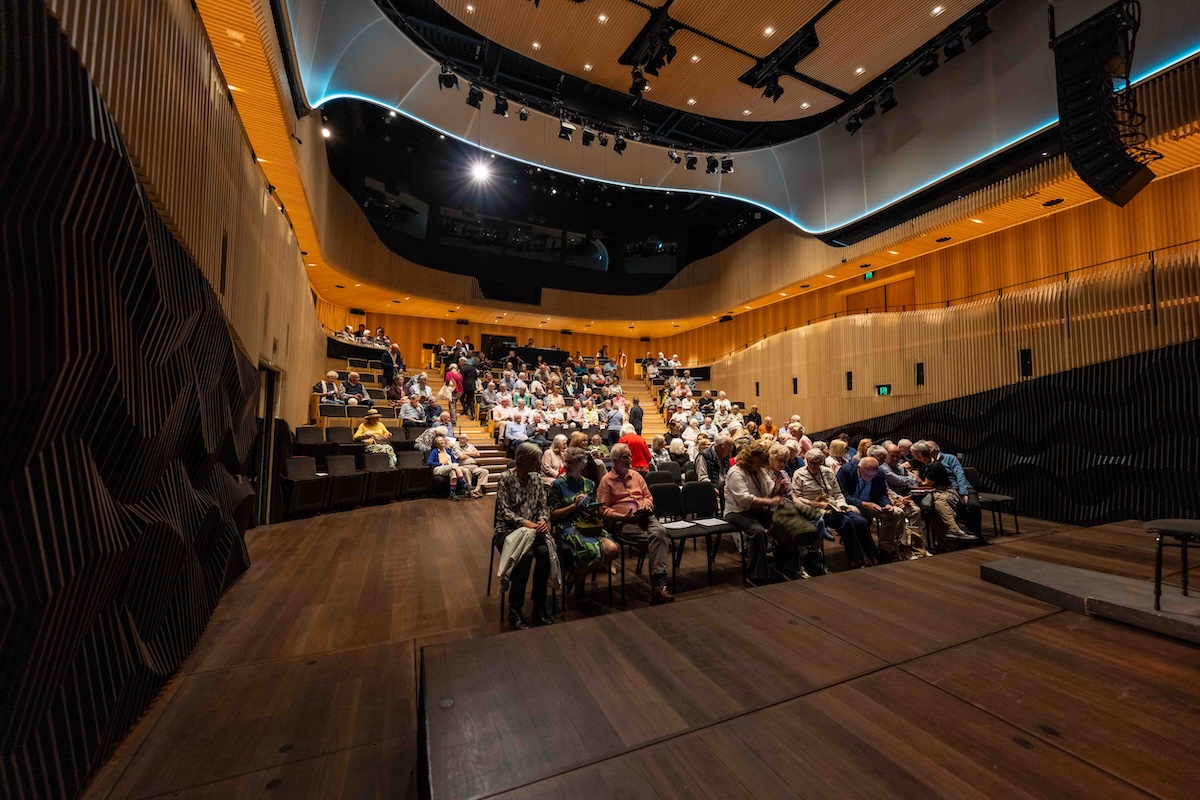
Ian Potter Recital Hall at The Hedberg during the Tasmanian Chamber Music Festival 2026. Photo © Alastair Bett
The 2026 program spans more than 300 years and takes audiences from Bach to the Australian premiere of Si je te quitte, nous nous souviendrons by young French composer Camille Pépin. Along the way, there are works by Ravel, Debussy, Poulenc and Franck, as well as musical diversions to Argentina and Bohemia.
The distinct French throughline honours the late Joscelyne Baroness van Boetzelaer, a patron of the arts and longtime friend of pianist Piers Lane. She fell in love with the festival when she attended in 2024 with Lane, who dedicates his performances this year to her memory.
Block’s programming, however, does not simply rely upon national affiliations or chronological progression. Instead, the repertoire reveals unexpected affinities between composers, performers and musical traditions which are illuminated by Dr Robert Gibson in his insightful pre-concert talks.
The opening concert sets the bar remarkably high. At St George’s Church in Battery Point, Van Diemen’s Band, under Artistic Director and Violinist Julia Fredersdorff, joins tenor Kyle Stegall for a program of Bach’s instrumental and vocal music.
The church, consecrated in 1838, was designed in the Neoclassical style by government architect John Lee Archer, with its distinctive three-tiered tower and Doric portico added later by convict architect James Blackburn. Its sandstone walls and historic interior provide a fitting setting for Bach.
Stegall, whom I reviewed in Britten’s War Requiem just a week earlier, impresses again with his elegant legato, beautifully executed extended runs and exceptional German diction. His transitions between registers are seamless, his intonation always secure in spite of Bach’s contrasting vocal textures that constantly test the tenor’s agility and control. He brings a deeply introspective quality to Bach’s arias, building towards an almost operatic intensity of angst and guilt in the final cantata, Ich armer Mensch, ich Sündenknecht.
Fredersdorff and her colleagues match him with attentive playing. Harpsichordist Donald Nicolson brings fastidious rhythmic control to the continuo, while flautist Jessica Lee’s fleet fingering in the Badinerie from Bach’s B minor Orchestral Suite is a highlight. The concert draws a capacity audience, marking an auspicious beginning for a festival that relies almost entirely on ticket sales and private support.
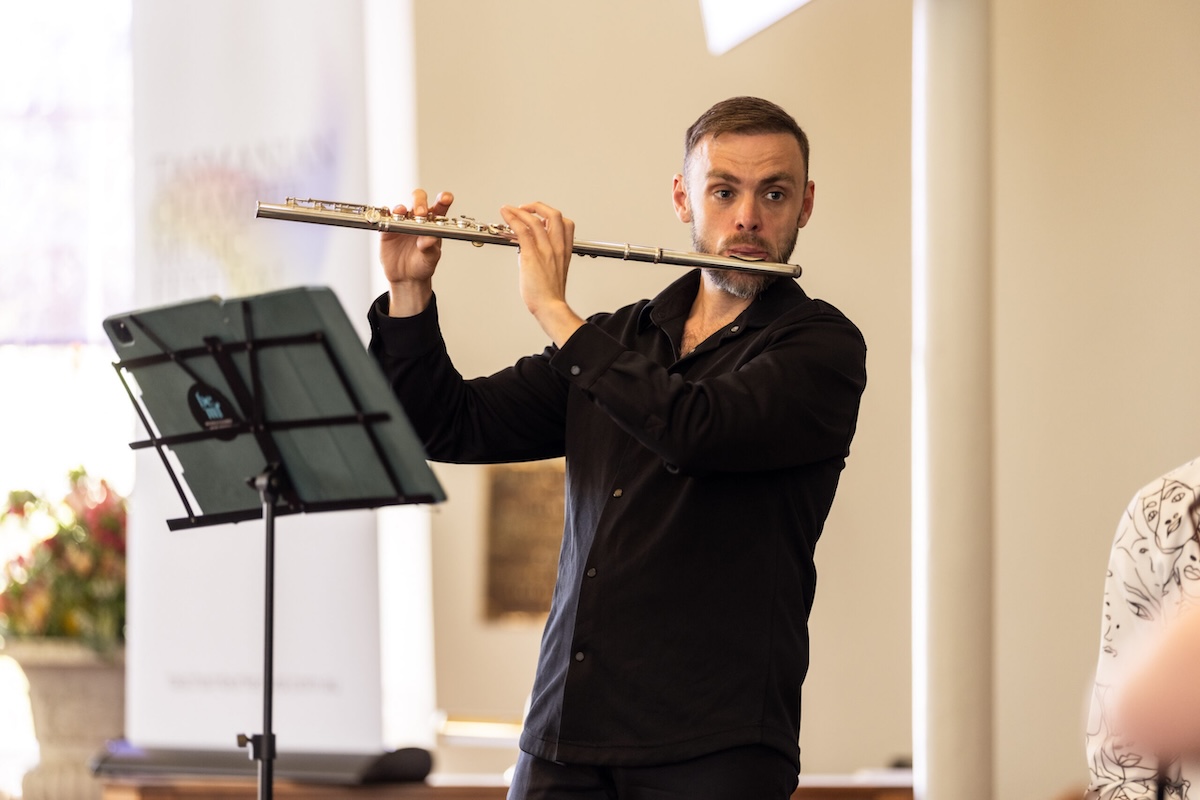
Joshua Batty with Chroma Quartet at the Tasmanian Chamber Music Festival. Photo © Alastair Bett
Friday sees the festival move to the Ian Potter Recital Hall, part of the Hedberg Performing Arts Centre, which opened in 2020 after almost a decade of planning and construction. Designed by Tasmanian firm Liminal Architecture in collaboration with Singaporean studio WOHA, the building brings contemporary performance spaces into a precinct that incorporates the historic Theatre Royal and the former Hedberg Brothers Garage.
The foyer is a striking example of how the building acknowledges Palawa history through its design. Its carpet, designed in collaboration with Tasmanian Aboriginal textile and fashion designer Michelle Maynard, tells the story of The Dance of the Banksia Wicks, in which fire is carried between communities using smouldering banksia wicks in abalone shells wrapped in kelp.
The recital hall boasts an in-built variable acoustic system capable of adapting its reverberation to different performance requirements. The musicians at the festival, however, are so impressed by the hall’s natural acoustic that they decide such enhancement is unnecessary.
The move to the Ian Potter Recital Hall brings with it a change of colour as flautist Joshua Batty and pianist Aura Go explore French music alongside works by Argentine composer Carlos Guastavino. They begin with Debussy’s Prélude à l’après-midi d’un faune, followed by Lili Boulanger’s Three Pieces and Poulenc’s Flute Sonata, both offering a contrasting human sensibility that sits alongside the more elusive colours of Debussy. Messiaen’s Merle noir brings birdsong into the mix, while Guastavino’s Mis Amigos and selections from Cantilenas Argentinas introduce a more songful Argentine idiom.
The program’s geographical shifts feel natural, the encore taking us to Georgia for composer Otar Taktakishvili’s lyrical Aria from the Sonata for Flute and Piano in C major.
In the evening, Piers Lane returns to the festival for a solo recital that places Bach’s Toccata in C minor alongside Debussy’s Suite bergamasque and Chopin’s Préludes, Op. 28. His playing combines elegant phrasing with impressive fingerwork, and the recital’s changing musical landscapes demonstrate the range of his artistry. The Chopin in particular leaves the audience floating on a cloud.
Lane’s indefatigable style and multifaceted virtuosity anchor the festival, his presence a reminder of how important it is to program artists whose experience and authority can ground a varied program like this. Lane does just that.
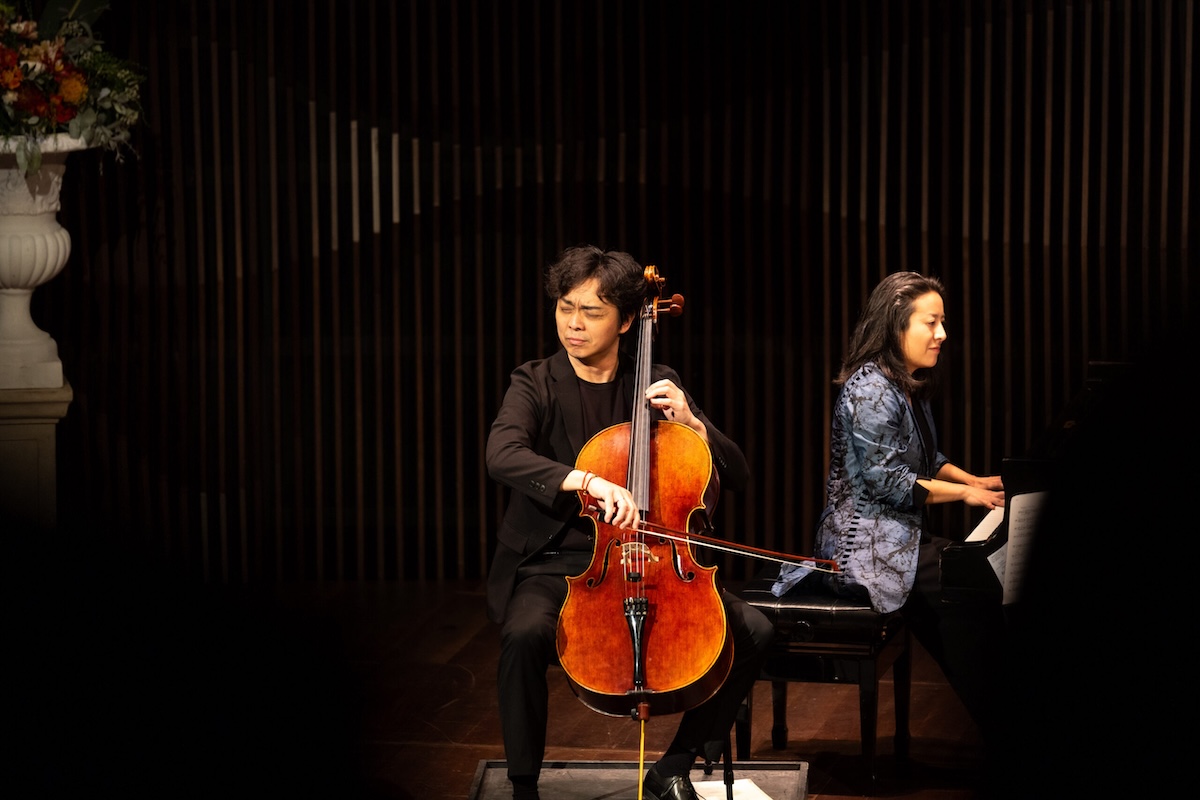
Li-Wei Qin and Aura Go at the Tasmanian Chamber Music Festival 2026. Photo © Alastair Bett
On Saturday, cellist Li-Wei Qin and pianist Aura Go take the audience from Bach’s Sixth Cello Suite to Schumann’s Fantasy Pieces and Britten’s Cello Sonata. Spanning more than two centuries, the works offer three distinct perspectives on the cello, from Bach’s solo writing to the increasingly intimate dialogue between cello and piano in Schumann and Britten.
The afternoon sees violinist Emily Sun make her festival debut alongside Lane in an all-French program. Poulenc’s Violin Sonata is followed by Pépin’s Si je te quitte, nous nous souviendrons (originally written for Renaud Capuçon), before Franck’s expansive Violin Sonata.
Poulenc’s sonata carries its own history of grief. Written for the violinist Ginette Neveu, who gave its premiere, its final movement was revised after her death in a plane crash in 1949. The work’s expressive contrasts and unsettled lyricism take on added poignancy in the context of the festival’s dedication to the late Joscelyne Baroness van Boetzelaer.
Pépin’s work, meanwhile, offers a glimpse of a younger composer’s voice. Lane’s finely filigreed piano playing provides an undercurrent for Sun’s rhythmic and often hypnotic playing. They perform the piece here together for the first time, yet their musical dialogue feels instinctive.
Franck’s sonata makes full use of the recital hall’s remarkable acoustic, with its long-spanning phrases and dynamic contrasts given room to breathe. The encore, Jascha Heifetz’s arrangement of Manuel Ponce’s Estrellita, is an exquisite change of mood, Sun’s double-stopping adding richness to the violin’s singing line.
On Saturday night, we return to St George’s Church where Chroma Quartet joins Batty for Prokofiev’s Flute Sonata, arranged for flute and string quartet by Lee Bradshaw, before turning to Beethoven’s String Quartet in A minor.
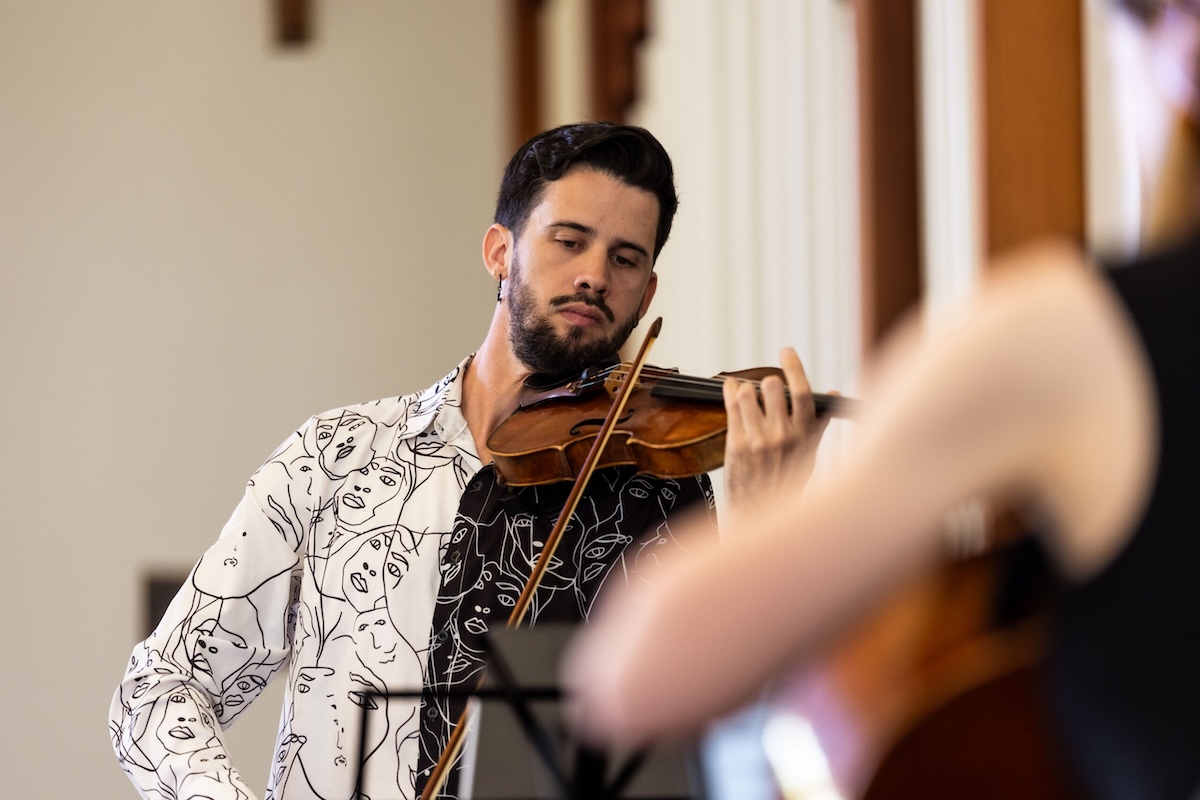
Chroma Quartet’s Harry Bennetts at the Tasmanian Chamber Music Festival 2026. Photo © Alastair Bett.
I recently interviewed Batty about his Prokofiev album, which he recorded with Chroma and features the Sonata, and this live performance reveals how much their collaboration has developed. Here, they throw themselves into the piece with a youthful vigour that brings its contrasts into sharp relief. At moments, I hear echoes of the skittish energy of ‘The Young Juliet’, the spirited ‘Masks’ and the lyricism of the ‘Balcony Scene’ in Prokofiev’s Romeo and Juliet. These resonances aren’t musical quotations but nevertheless remind us of the composer’s exceptional gift for characterisation.
Chroma’s pedigree is exceptional, with members drawn from leading Australian orchestras, including the Melbourne, Sydney and Tasmanian Symphony Orchestras as well as the Australian Chamber Orchestra. Formed in 2020 and comprising violinists Harry Bennetts and Victoria Bihun, violist Elizabeth Woolnough and cellist Eliza Sdraulig, the quartet has always possessed technical assurance and an inherent rapport. What is increasingly evident, however, is a love of playing together that makes their performances infectious.
This extends to their partnership with Batty. More than simply listening to one another, they seem interconnected, as if operating with a single consciousness – a gestalt musician that breathes as one through each note and phrase.
Australia boasts a wealth of string quartets of the highest order, but the recent disbanding of the Goldner String Quartet after 30 years leaves a vacancy among the country’s leading ensembles. Chroma’s performance proves it has the musical maturity and collective identity to fill it.
The quartet’s performance of Beethoven’s String Quartet in A minor provides a profound counterweight to the Prokofiev. Written after a serious illness, the work’s central Molto adagio bears Beethoven’s own description: Heiliger Dankgesang eines Genesenen an die Gottheit, in der lydischen Tonart – a holy song of thanksgiving from a convalescent to the deity, in the Lydian mode.
Chroma’s players are at their most affecting in this movement, with Beethoven’s aching, hymn-like writing alternating with exultant passages that evoke spiritual renewal. The performance is among the festival’s most moving moments, its intensity growing thanks to the quartet’s collective concentration.
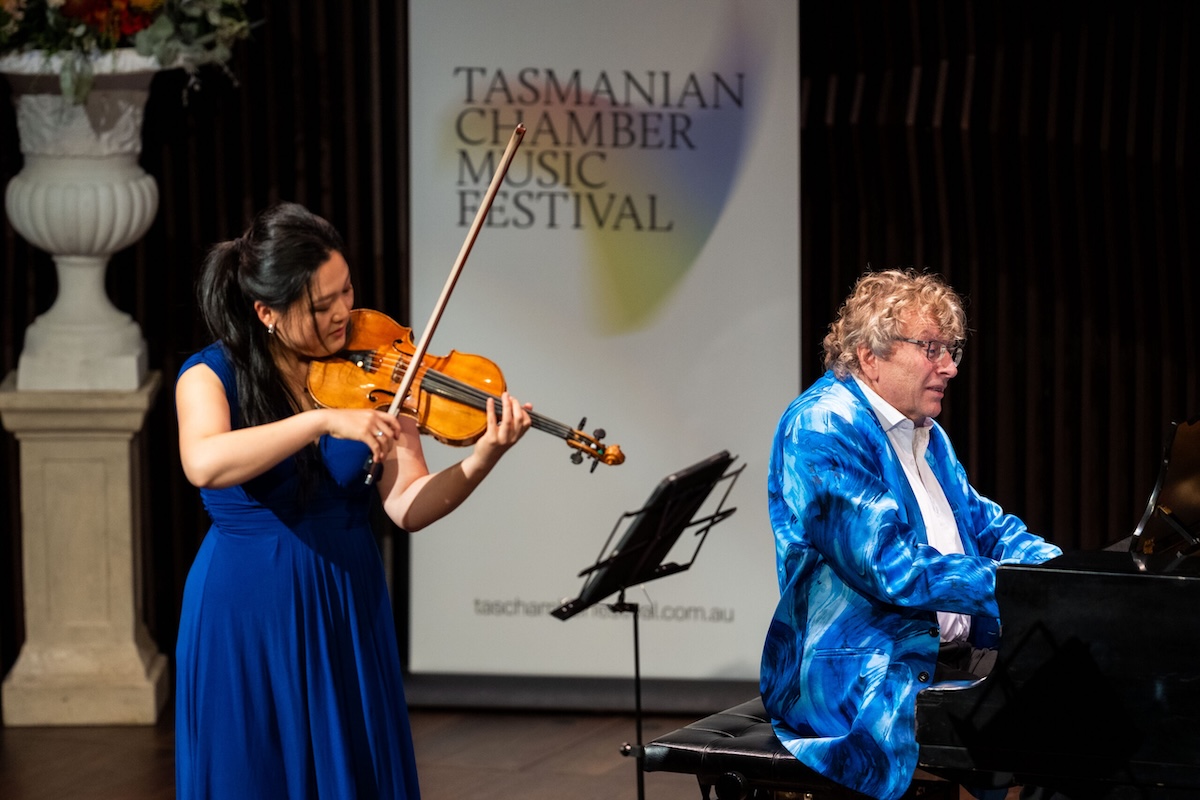
Emily Sun and Piers Lane at the Tasmanian Chamber Music Festival 2026. Photo © Alastair Bett
Sunday’s finale brings Lane together with Sun and Qin at the Ian Potter Recital Hall for Schubert’s Notturno, Smetana’s Piano Trio in G minor and Ravel’s Piano Trio in A minor. The three musicians play with the ease of an ensemble that has spent a lifetime together, although Lane and Sun are the only pair with a history of performing together – they first met during a performance at 11 Downing Street when Rishi Sunak was still Chancellor.
Smetana’s trio, written in 1855 after the death of his four-and-a-half-year-old daughter Bedřiška, is one of the repertoire’s most intensely personal works. The opening violin theme is anguished, and the music’s Czech dance rhythms and sudden changes of mood do little to soften its underlying grief. Lane’s performance captures both its emotional weight and its Slavic character, the folk-inflected elements emerging naturally rather than forced.
The work holds particular significance for Lane, who first played it as a student in Brisbane. It is clearly a piece that has lived with him, and his performance has the assurance of long acquaintance. The Ravel, by contrast, is new to him, yet he manages to inhabit its intricate textures and rhythmic vitality with equal conviction. You would never guess it is the trio’s first time playing it together.
The trio’s performance also reinforces a central theme of the festival: the art of listening.
During a panel discussion held at lunch on the final day, Lane, Sun and Qin discuss how chamber music has improved their musicianship more broadly. And it’s a skill that applies beyond the world of music. Qin even recalls the Medici Quartet being engaged to coach participants at the Davos World Economic Forum in the art of listening to one another.
As Qin puts it, if you are a chamber musician, you must “play with your ears”, and it is an apt summation of what Block has achieved in assembling this year’s exceptional lineup.
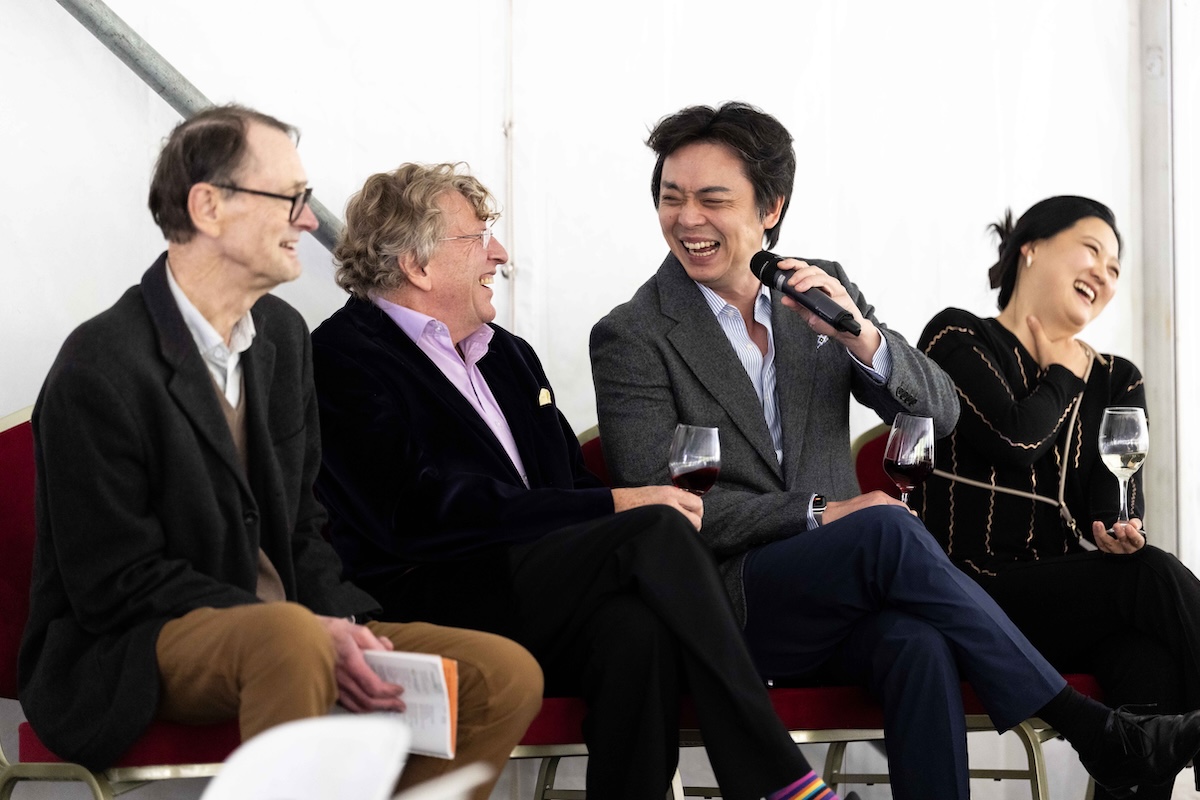
Stephen Block, Piers Lane, Li-Wei Qin and Emily Sun at the Royal Tasmanian Botanical Gardens during the Tasmanian Chamber Music Festival 2026. Photo © Alastair Bett
The three-course lunch, supplied by Bird in Hand, is held in a marquee on the lower grounds of the Royal Tasmanian Botanical Gardens. Showcasing fine local produce and Tasmanian wines, it is capped by a magnificent pavlova, but the real icing on the cake is the opportunity to chat with the musicians we’ve just heard in concert.
This conviviality is integral to the festival’s appeal. We are not merely ticketholders but participants in a shared experience that embraces the arts – musical, visual and culinary – and the city of Hobart plays an undeniable role in the festival’s broader appeal.
A visit to MONA – where Anselm Kiefer’s extraordinary Elektra (based on his 2003 set design for Richard Strauss’s opera) offers another encounter between art, music, history and myth – serves as a potent reminder that the city’s pleasures extend well beyond the concert hall.
One has to hope that those in charge of the state’s coffers are paying attention. According to the organisers, 75 percent of the festival’s audience travels from mainland Australia, with most concerts at capacity. Yet the festival receives no dedicated arts funding, relying instead on ticket sales, patrons and a limited contribution through government events funding, justified by the tourism it brings to Tasmania.
That model makes its achievements all the more impressive. The programming is ambitious while remaining accessible, the artists are of the highest calibre, and the venues are chosen for their character as well as their acoustic quality. Block’s achievement lies in bringing these elements together while allowing the music itself to lead.
By the time the final notes of Ravel have faded, and the last glasses are raised in the gardens, the Tasmanian Chamber Music Festival has delivered far more than a series of concerts. It has taken us on a journey through musical history, introduced us to Tasmania’s built and natural heritage, and demonstrated what happens when exceptional musicians are given the space to listen, respond and play as one.
After four days on the Apple Isle, it’s hard to come back down to earth.
The ninth Tasmanian Chamber Music Festival will be held in Hobart, 28–31 October, 2027.
Piers Lane will perform Chopin’s Nocturnes for Solo Piano at Snow Concert Hall, Canberra on 29 October, and Ravel’s Piano Trio and Debussy’s Suite bergamasque with the Australia Ensemble UNSW at the Sir John Clancy Auditorium, UNSW Sydney, on 7 November.
Jansson J. Antmann was a guest of Tasmanian Chamber Music Festival.






Comments
Log in to start the conversation.