




By the end of Isata Kanneh-Mason’s Australian debut solo recital program, you may feel a sense of a dawn breaking, of a horizon brightening.
If you do, then the British pianist will consider her performance a job well done.
“I don’t like to impose too much on people’s imagination because I really think a concert is such a unique experience for everyone,” she says. “But I like to think it creates the impression of doors opening … of hope.”
After opening her program with Beethoven’s Moonlight Sonata and Ravel’s Gaspard de la nuit, Kanneh-Mason plays two pieces by Bulgarian-British composer Dobrinka Tabakova before arriving at Beethoven’s Waldstein Sonata. The trajectory is a considered one, Kanneh-Mason explains, inspired by one of the Tabakova works, Halo.
“It is literally going from darkness into light as the halo gets brighter. I’ve expanded that so that now the whole program is built around that idea.”
“I like going from the Moonlight into the Gaspard de la nuit as well because the Moonlight is quite dark in the first movement and virtuosic in the last,” she says. “So there’s a nice transition from that into the Gaspard de la nuit as well.”
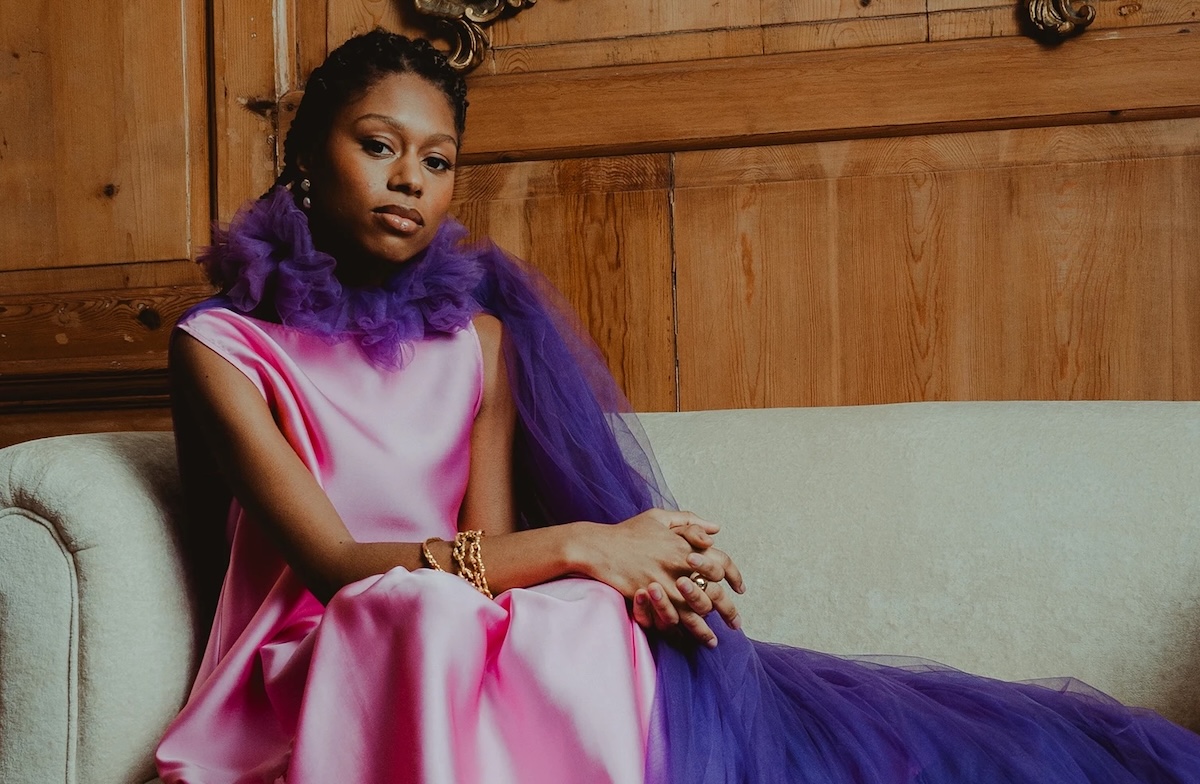
Isata Kanneh-Mason. Portrait © Karolina Wielocha
Based on poems by Aloysius Bertrand, Ravel’s notoriously difficult Gaspard de la nuit has acquired a reputation as a technical showpiece. Its three movements – Ondine, Le Gibet and Scarbo – demand extraordinary control, speed and stamina. Kanneh-Mason first encountered the Ravel as a teenager.
“I heard about it as the most difficult piano piece ever, and so my 16-year-old self was like, ‘Oh, this could be exciting’,” she recalls. “But then my teacher told me about the poems and I got to know them really well. I think it makes such a difference to the music. You really know why you’re playing the piece, not just thinking about which note comes next.”
While many pianists are content to let the music and the instrument do the talking. Kanneh-Mason likes to speak to her audience, too.
“I usually talk a bit about the poems to the audience before I play them, so that everyone can kind of be on the same page,” she says. “Maybe people will see something new in the pieces if they know them well and if they don’t, hopefully they’ll discover something.”
Though she doesn’t naturally relish being centre stage in this way, Kanneh-Mason believes that an element of conversation between audience and performer is important.
“I think it’s important before a recital to say at least something to bring people into my thinking and have them see the music in the way that you do.”

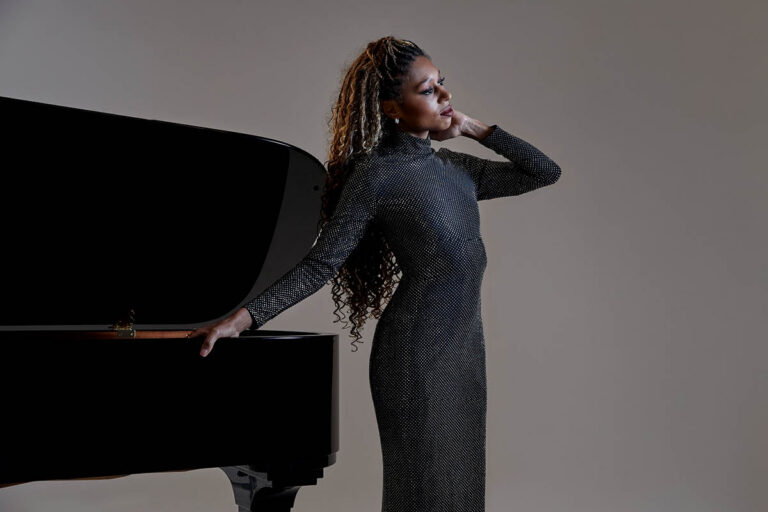
Isata Kanneh-Mason. Portrait © Karolina Wielocha
Kanneh-Mason is one of the foremost interpreters of Dobrinka Tabakova’s music having worked closely with the composer in person.
“She gave me some really great tips,” Kanneh-Mason says, adding that Tabakova’s advice extended to the physical and sonic qualities of the music: “She even showed me how to play certain sounds that she wanted to hear in the piece. It was like a mini piano lesson.”
Turning 30 this year, Kanneh-Mason has compressed a vast amount of performance experience into a relatively short timeframe. She made her solo debut at the BBC Proms in 2023, performing Prokofiev’s Piano Concerto No. 3 with the BBC National Orchestra of Wales at the Royal Albert Hall.
After signing with Decca Classics in 2019, her recordings have ranged from Clara Schumann and Fanny Mendelssohn to Felix Mendelssohn, Rachmaninov and Prokofiev, as well as works drawn from her childhood musical experiences. Her concert work spans solo recitals, chamber music and concertos, while collaborations with her brother, cellist Sheku Kanneh-Mason, have become an important part of her musical life.
Recital performance offers a certain freedom, she says.
“In the end, it’s just you and the music. You can do it completely differently each time and fully control the narrative.”
But that control only goes so far. The mood, the atmosphere of the room, the energy of the audience and the piano itself all contribute to what happens on the night.
“All those things kind of interact,” Kanneh-Mason says. “I don’t ever walk onto the stage thinking, ‘today I will do this’. It just kind of happens based on all of those variables. Most places don’t even give you the luxury of choosing a piano. It’s ‘this is what you’re playing’, and you have a couple of hours before the concert to get used to it. And if the keys are sticky and don’t work properly, you’ve got to somehow make it work.”
Isata Kanneh-Mason in Recital: Melbourne Recital Centre, 9 October and the Concert Hall, Sydney Opera House, 12 October.







Comments
Log in to start the conversation.