It’s a paradox. There’s nothing like historically informed performance practice to make the old warhorses of the concert repertoire gambol like newborn foals again.
That’s certainly the sensation one gets listening to Italian conductor Riccardo Minasi – here making his WASO debut – as he applies a musicological blowtorch to three favourite works of the Classical period.
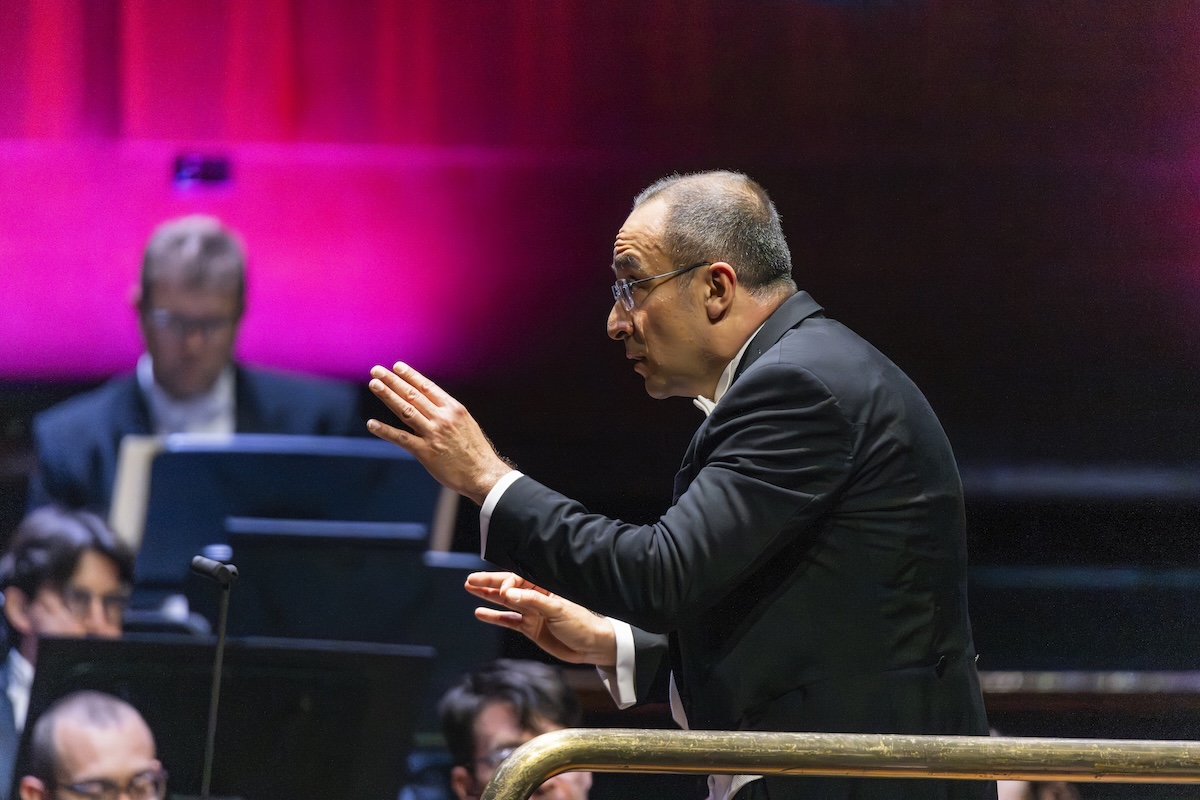
Riccardo Minasi conducts the West Australian Symphony Orchestra in Beethoven’s Eroica. Photo © Artshoot Media
Minasi is a child of the exciting, flamboyant Italian period-instrument scene, a co-founder of Il Pomo d’Oro, former concertmaster of Il Giardino Armonico and currently Principal Guest Conductor of Ensemble Resonanz at Hamburg’s Elbphilharmonie.
His interpretative style is characterised by a rhetorical intensity that is both analytical and thrilling, the ebb and flow of tension achieved through chiaroscuro extremes of tempo, dynamics and orchestral colour.
Minasi opens by leading an orchestra laid out with antiphonal violins (as it is for the rest of the program) through excerpts from Mendelsohn’s incidental music to A Midsummer Night’s Dream.
The Overture shines and thrums with precision and clarity, the opening woodwind chords lapidary rather than gauzy, the strings etching rather than shimmering – as they are in the Nocturne, as the horn’s moonbright song floats across their surfaces. The quicksilver Scherzo is more menacing than playful – these are fairies to be feared.

Jenna Smith and West Australian Symphony Orchestra: Beethoven’s Eroica. Photo © Artshoot Media
The elegant phrasing of Principal Trumpet Jenna Smith proves the ideal foil to Minasi’s volatile artistry in Haydn’s Trumpet Concerto, composed in 1796 for the newfangled keyed instrument which for the first time allowed the trumpet full access to the chromatic scale.
So the shock of the new here, too. Smith enters into a genuine, if playfully fraught, conversation with her orchestral buddies, interloper Minasi drawing objective connections all the while. Though Smith’s artistry especially comes to the fore in the first movement cadenza, her luminous tone and genial virtuosity as seductive as ever – as is, after a gorgeous Andante and sparkling Allegro, the heartfelt simplicity of her solo encore, Amazing Grace.
Following the interval, Beethoven’s Symphony No. 3 “Eroica” – where the central paradox becomes most profound.
Minasi takes the composer’s brisk metronome markings and runs with them. The first chords are like the opening volleys of a battle, subsequent syncopations primal rhythms distorted by close combat. Lean strings, raw brass and tough timpani follow Minasi through the score with the zeal of new converts. The usual Mitteleuropean soundworld is laid waste.

Jenna Smith and West Australian Symphony Orchestra: Beethoven’s Eroica. Photo © Artshoot Media
The Funeral March’s grief is consequently stripped of sentimentality, the major-key interlude a brief respite from the darkness before the music plunges once more into the breech.
Even the beauty of the three-part horn calls in the Scherzo’s trio conceals a menacing undercurrent – the baying of a pack of hunting dogs. The Finale’s variations under Minasi’s pitiless direction push forward towards a blazing conclusion of an argument that could never have ended any other way.

Comments
Log in to start the conversation.