




Equally active in performing, conducting and arranging in the HIP-est style, Chad Kelly could justifiably be added to the pantheon of Masters of the Baroque.
This thrilling Thursday night concert with Perth soprano Prudence Sanders and musicians of the West Australian Symphony Orchestra, which Kelly directed from the harpsichord throughout, only served to strengthen that claim.
The first half saw the violins arranged antiphonally; the second, grouped together to Kelly’s left. For Bach’s Harpsichord Concerto in D minor BWV 1052, a smaller string ensemble.
The Overture from Handel’s Judas Maccabaeus raised the curtains and expectations, Kelly’s dynamic, whole-body approach to conducting eliciting from the orchestra a weighty larghetto and punchy fugal allegro.
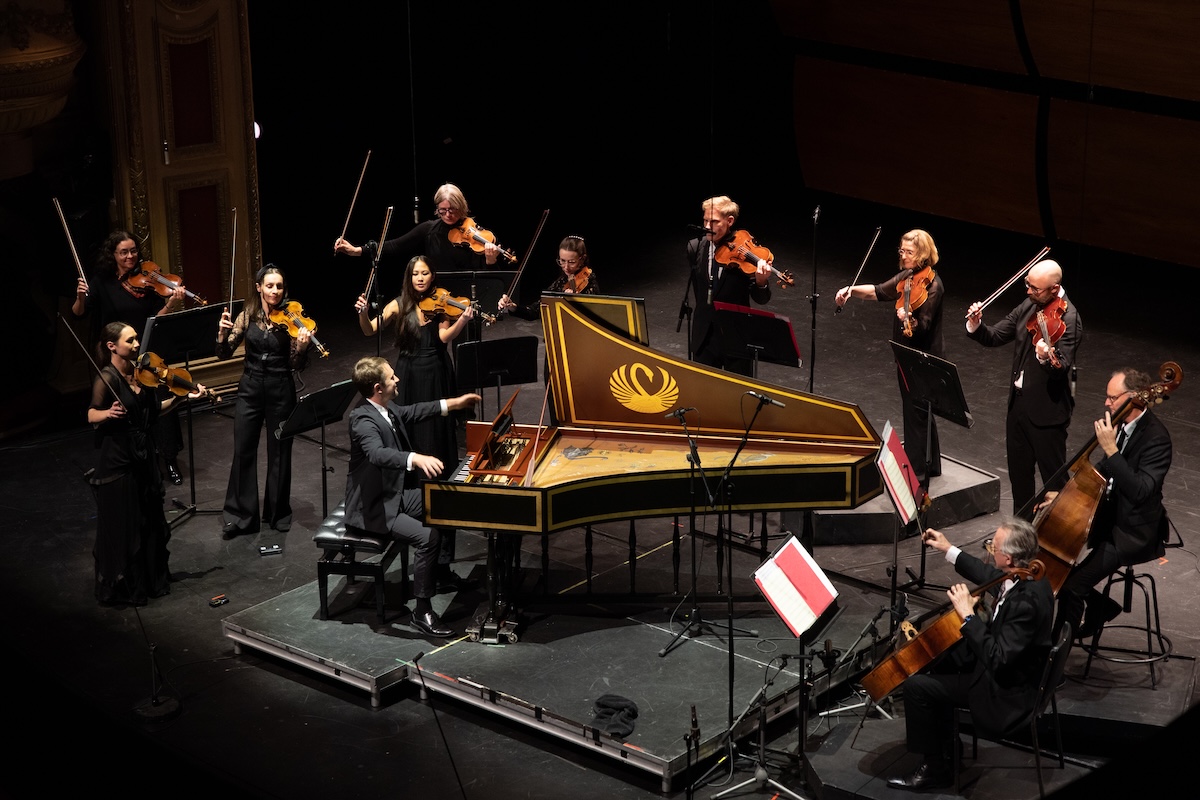
West Australian Symphony Orchestra: Masters of the Baroque. Photo © Daniel James Grant
Sanders’ “Un Pensiero voli in ciel” from Handel’s Il delirio amoroso and “Tu del ciel ministro eletto” from the composer’s Il Tionfo del Tempo e del Disinganno followed. If the former’s virtuosic displays from Sanders and obbligato violinist Alexandra Isted, supplemented by some fine work from oboist Liz Chee, dazzled, the latter’s whispered first violins and ripieno pizzicato...
Continue reading
Get unlimited digital access from $4 per month
Already a subscriber?
Log in





Comments
Log in to start the conversation.