


Isata Kanneh-Mason’s debut at the Sydney Opera House on Monday night charted a journey through nocturnes, bookended by two of Beethoven’s pivotal sonatas.
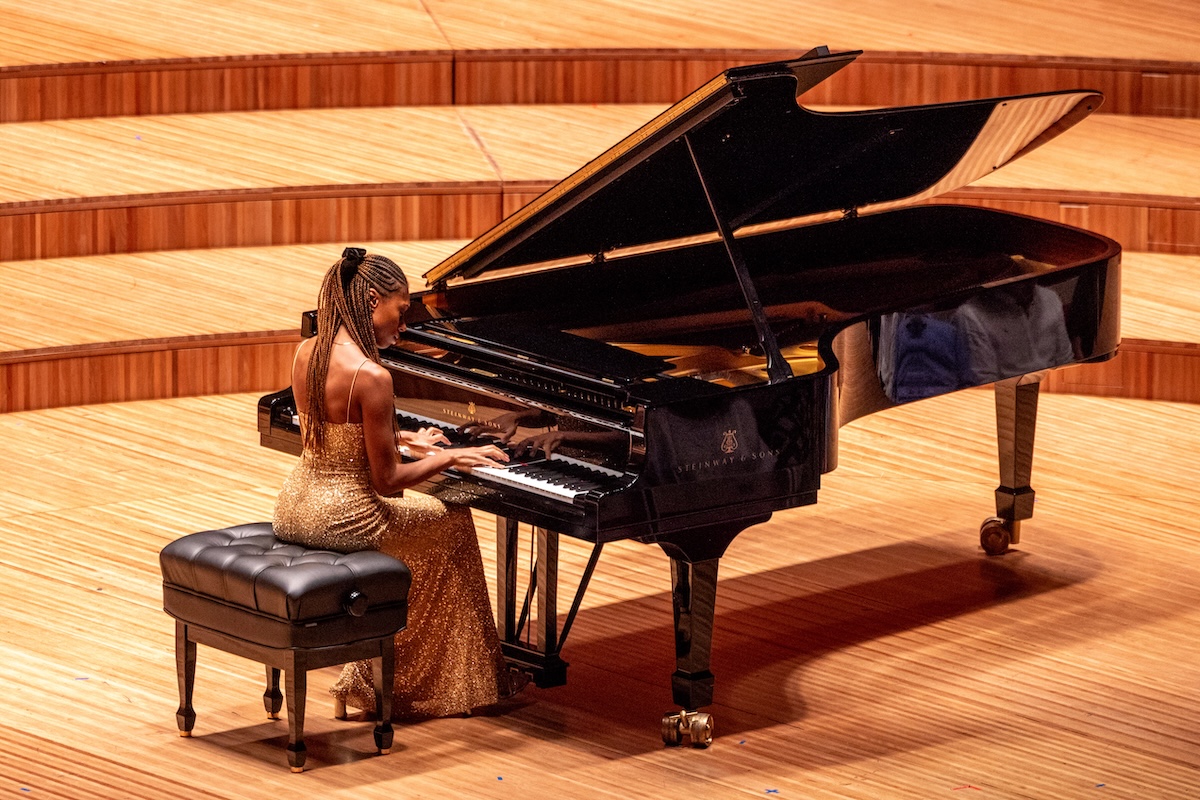
Isata Kanneh-Mason in Recital. Concert Hall, Sydney Opera House. Photo © Sydney Symphony Orchestra
Rarely is the concert hall truly quiet, but there was something spellbinding about Kanneh-Mason’s first phrase: the opening of Beethoven’s ‘Moonlight’ Sonata.
With restrained stillness, Beethoven’s plaintive melody was draped over the famous, hypnotic triplets of the accompaniment. The second movement, an Allegretto, was played with notable weight and danced with sweet romanticism. Kanneh-Mason deftly navigated the third movement, although the furiously rising arpeggios were slightly clouded by the resonance of the hall.
From Beethoven, we moved to a different shade of the nocturnal: Maurice Ravel’s fiendish Gaspard de la nuit. There was a perpetual sense of ease in Kanneh-Mason’s performance. The rippling opening sparkled, and the finale darted through its erratic shifts in character, but always under complete control. Kanneh-Mason’s technical prowess shone through the constant, unfaltering toll of the B-flat that characterises the desolate second movement, Le Gibet.
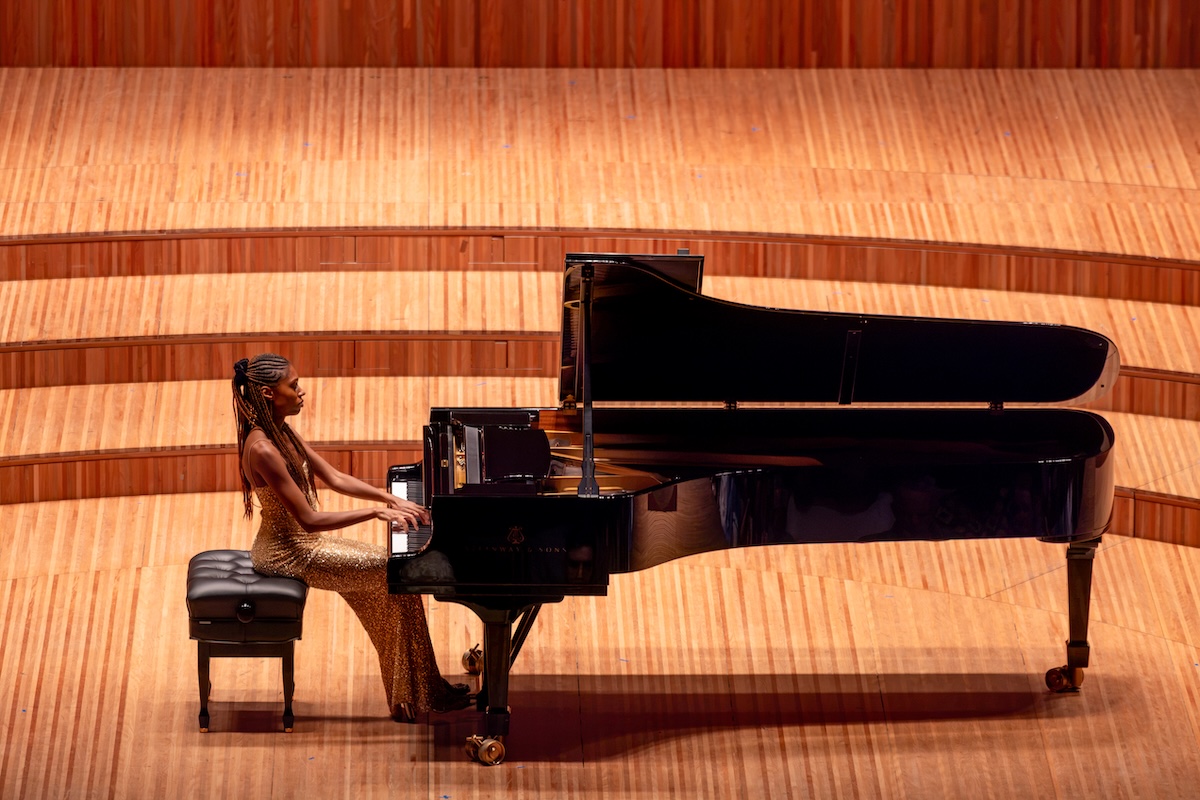
Isata Kanneh-Mason in Recital. Concert Hall, Sydney Opera House. Photo © Sydney Symphony Orchestra
Beyond the interval came a more contemporary offering: two works by Bulgarian-born composer Dobrinka Tabakova. The first, her brief Nocturne, harked back to the opening of Beethoven’s ‘Moonlight’ Sonata, with its hazy, arpeggiated accompaniment. It made for a delightful prelude to the second work of the pair, Halo, with Kanneh-Mason connecting the two works without pause. Halo, in three movements, opens with an outburst of dissonance before spiralling into a radiant evocation of light.
Beethoven’s ‘Waldstein’ Sonata was the final work of the program. Although written only a few years after the ‘Moonlight’ Sonata, it finds Beethoven’s musical voice venturing into new territory. Kanneh-Mason brought a sense of rhythmic drive to the galloping opening movement while retaining a warm, controlled sensibility.
The second movement led into the brilliant sunshine of the finale, a joyous conclusion to a mammoth recital.
After rapturous applause, the encore offered a very different character. Kanneh-Mason’s own acrobatic arrangement of Burt Bacharach’s I Say a Little Prayer provided a final display of virtuosity.







Comments
Log in to start the conversation.