




Having played the Saint-Saëns ‘Organ’ Symphony in the afternoon and accompanied the MSO Chorus for Duruflé’s Requiem the previous night, Joseph Nolan brought the Melbourne Symphony Orchestra’s Grand Organ Festival to a triumphal close with a solo recital.
Nolan is an acknowledged French music specialist, so his choice of Guilmant and Widor was hardly a surprise, given the heavy French leaning of the rest of the festival’s program. But, given his own comment that the Town Hall organ is only suitable for French repertoire ‘so long as you’re choosing the right stops,’ I had hoped for a more varied program. Unfortunate, too, that the program contained no details of the organ itself.
Nonetheless, the enthusiastic audience was treated to a concert of fine, full-bodied, and at times fiery playing. Those present for Nolan’s previous residencies on this organ – his 2017 complete Widor symphonies in 2017 and all the Vierne symphonies in 2023 – knew they were in for a treat: technical mastery coupled with nuanced musical insight. Both were on prominent display, unlike Nolan’s hands and feet, which remained hidden.
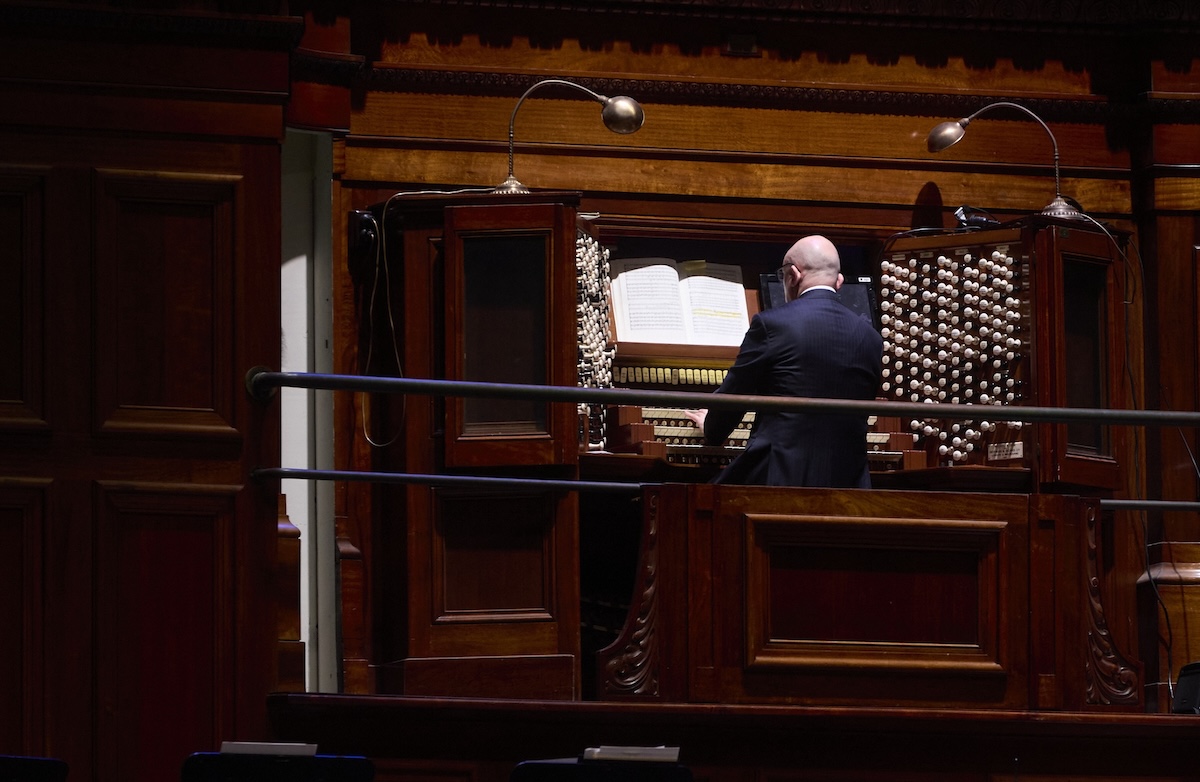
Joseph Nolan at the console of the Melbourne Town Hall Grand Organ. Photo © Laura Manariti
Alexandre Guilmant is not the household name that Widor is and deserves wider renown. He was organist for 30 years at La Trinité in Paris, where Messiaen would later serve after being taught by Widor. Guilmant was well-known for his organ tours in the United States, so perhaps Nolan was right in selecting his music for an organ with a significant American sound-palette following its 2000 renovation. The Organ Sonata No. 1, from 1874, is Guilmant’s most-often performed work, full of contrasts, rapid finger-work, and pedal virtuosity. Nolan negotiated the rhythmic complexities with ease. The thundering finale was thrilling.
Only five years separate the sonata from Widor’s symphony, and parallels can be heard in the rapid figurations and beautiful cantabile melodies floating over lush harmonies. Widor’s work is famous for its final ‘toccata’ movement, the slightly re-voiced encore version of which showed Nolan at his showman finest: bold and confident. The middle movements, however, though nicely paced and with fine textures, failed to grab the imagination. There were moments of beauty and elegance, but our ears were probably as tired as Nolan’s fingers by then.
This was a rare chance to hear the greatest of 19th-century organ music performed by one of the finest players in Australia. Nolan should be praised for bringing it to us so successfully.








Comments
Log in to start the conversation.