

This year’s Sir Francis Burt Memorial Concert, in honour of that celebrated jurist and former Governor of Western Australia (1990-93), provided yet another opportunity to hear in action not only one of today’s most celebrated organists, Dr Joseph Nolan, but to relish the artistry of West Australian Symphony Orchestra Principal Trumpet, Jenna Smith.
Smith is a former student of previous WASO Principal Trumpet, David Elton, who joined Nolan for the 2024 Sir Francis Burt Memorial Concert. In my review of that concert, I noted that “despite the extraordinary musicianship and level of technical accomplishment exhibited by both artists, their chosen repertoire tended towards the lighter side, the program almost comprising a succession of (admittedly lengthy) encores.”

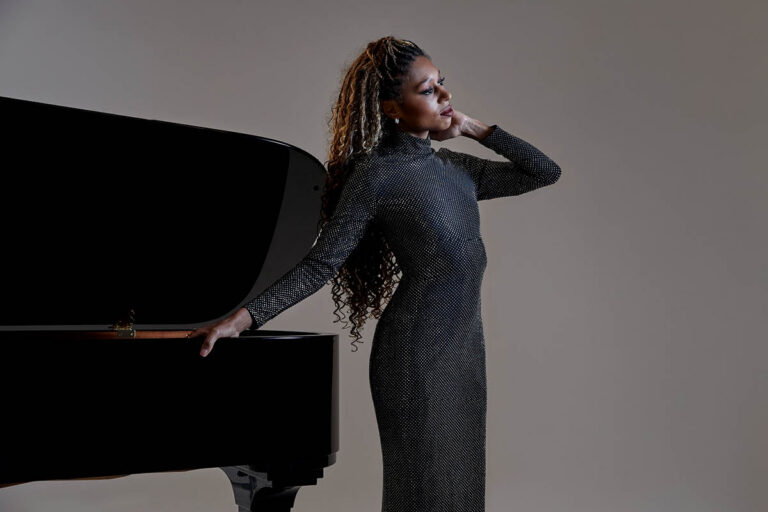
Jenna Smith. Photo © Ammon Creative
It was difficult to avoid an overwhelming feeling of déjà vu on this occasion. But that’s not wholly fair. Because, taken as a whole, this Thursday night concert had a satisfying arc to it, a cohesive affective thrust, which the earlier concert did not exhibit, suffering as that did from peaking early with Nolan’s magisterial performance of Charles-Valentin Alkan’s Impromptu sur le choral de Luther “Un fort rempart est notre Dieu”, Op. 69.
Nolan and Smith’s somewhat staid double exordium – Jeremiah Clarke’s ubiquitous Trumpet Voluntary and Purcell’s delightful D major sonata Z.850 – served the dual purpose of easing performer and audience into the journey ahead. In the Clarke especially, a gradual accumulation of colours and textures, culminating in Smith’s closing-bars flourishes, was tasteful and stylish.
If Smith’s plangent, high-lying cry in Alan Hovhaness’s Prayer to St. Gregory was then to find its secular counterpart in an arrangement of Rachmaninov’s Vocalise, it was equally valid that Nolan’s exhilarating account of the hymnlike finale from Saint-Saens’ Organ Symphony No. 3 in C minor should have found its spiritual counterpart in David Pettit’s Festival Prelude on Thaxtedafter Holst.
Very smart programming, given that, with such sublime sounds still ringing in one’s ears, Nolan and Smith should have welcomed the audience back from interval with such exquisitely blended accounts of Ravel’s Pavane pour une infante defunte and Vincent Persechetti’s The Hollow Men, a musical meditation on TS Eliot’s poem of the same name.
Moreover, Ravel’s perfumed homage to an ancient dance form easily evoked the Purcell; Persechetti’s reflections on Eliot’s “shape without form, shade without colour” likewise evoked the forlorn echoing chamber of Hovhaness’s own meditation.

Joseph Nolan. Photo supplied
Yet the program was to end not with a whimper but with a bang, with Nolan’s thrilling take on the finale from Alexandre Guilmant’s Organ Sonata No.1 in D minor and Carson Cooman’s wonderful Solstice Sonata for trumpet and organ. Indeed, the three movements of this last work – “Take Flight”, “The Dream of Peace” and “Glittering, Aglow” – formed as perfect a peroration as one might have wished for: a summation not just of Smith’s genial lyricism and Nolan’s intense musicality but of the program’s ultimate message, which another of Eliot’s poems neatly encapsulates:
“We shall not cease from exploration
And the end of all our exploring
Will be to arrive where we started
And know the place for the first time.”

Comments
Log in to start the conversation.