




Award-winning Australian classical guitarist Andrew Blanch’s program takes us on a journey that’s partly chronological, partly geographical, partly cross-cultural, from Vivaldi’s Baroque Venice through late-Romantic Spain and 20th-century Latin America to today’s Australia.
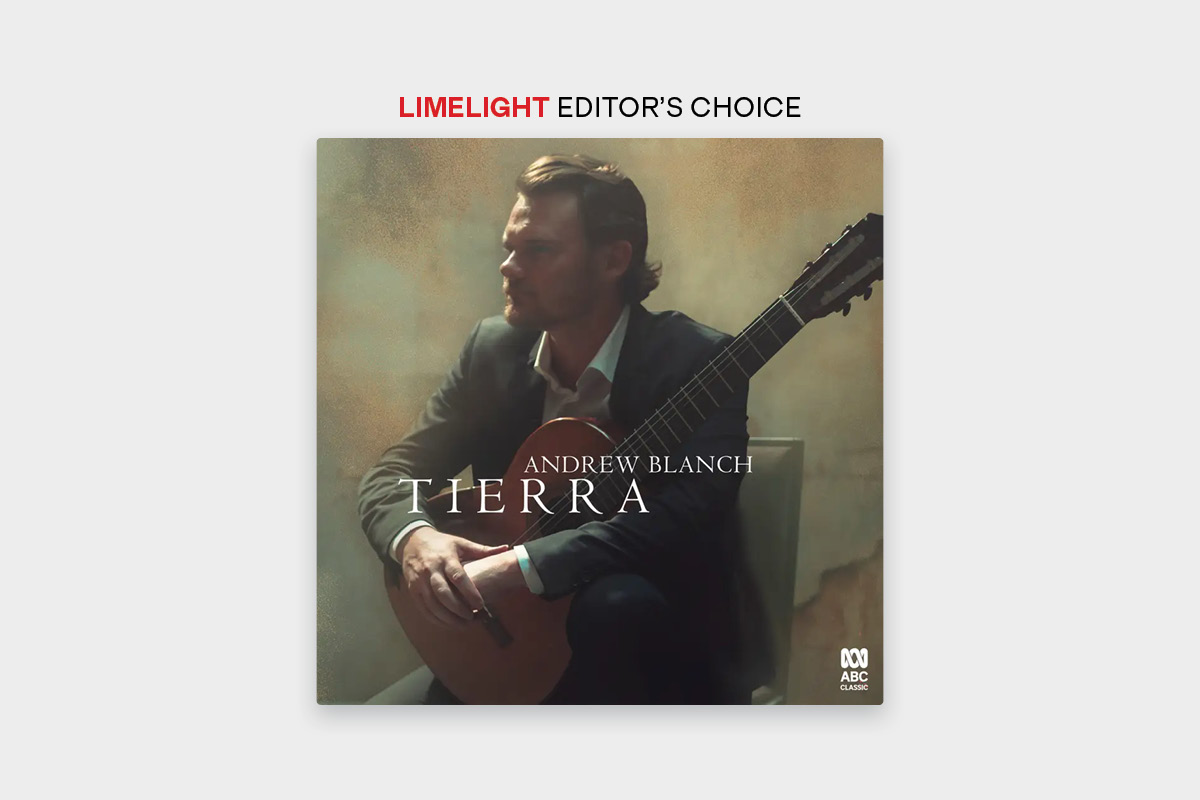
Cross-cultural especially, because, as Blanch reminds us, Baroque composers borrowed from other national styles and each other; Spain’s music is heavily indebted to Moorish influence; and Latin American traditions stem from Indigenous, Spanish, African and later global influences. Chilean-born, Australian-based Daniel Rojas’s guitar concerto Tierra, written for Blanch, is, in the composer’s words, “a personal exploration of how Latin American musical languages live within my own artistic voice.” Blanch hears in it a “panoply of influences too numerous to list.”
It’s easy to see why Blanch frames this program as both traditional guitar recital and exploration of cross-cultural exchange. I like, too, that he has drawn on arrangements by guitar legends – another form of exchange.
But hear it through and it’s as though the vivid colours of the Rojas have leeched into the rest of the music, courtesy of Blanch’s refined use of tone, timbre and dynamics. Perhaps this is what binds everything together? Rojas has a predilection for the spontaneous, the improvised, for drawing from memory and the imagination, for telling a story. Similarly, Blanch has the uncanny ability to project a clear musical structure in a way that feels truly spontaneous.
Blanch opens with a striking performance of John Williams’ arrangement for solo guitar of Vivaldi’s Concerto in D, RV230, originally for solo violin and strings. Williams worked from Bach’s solo keyboard arrangement. Blanch ensures the entire orchestra is evoked; his ornamentation and campanella effects are especially good. Venetian colour abounds, worthy of Titian.
Albéniz’ Córdoba, Granada and Asturias, arranged respectively by Williams, Manuel Barrueco and Andres Segovia, form their own colourful triptych, ringing with flamenco idioms and Iberian palettes. Here, Blanch is by turns dancing, singing and seizing on the contrasting sections and major/minor shifts with alacrity and astonishment.
Of the Latin American works, Manuel Ponce’s Scherzino Mexicano has a deliciously bittersweet quality, especially in Manuel Ramos’s arrangement for guitar. Los Caujaritos by Venezuelan harpist and folk musician Ignacio “Indo” Figueredo; Sete Cordas by Brazilian guitarist Raphael Rabello; and Argentine guitarist Cacho Tirao’s arrangement of tango exponent Pintín Castellanos’ La Puñalada form their own gloriously rich triptych, bursting with colour, character and vitality.
Finally, to Rojas’ compelling and immensely enjoyable Tierra. The percussion-heavy orchestration, which also favours dark, lower registers in the strings and winds, is remarkably colourful, the solo guitar writing alive with strumming rapid figurations and, in the second-movement milonga, a yearning cantabile that is very affecting indeed. It also has a brilliant cadenza, feelingly despatched by Blanch.
The first movement is bustling, angular, redolent of Villa-Lobos and Brouwer; the third-movement scherzo bursts with energy and sociability; and the finale opens with guitar alone, lyrical and more serene, yet animated by Latin American rhythms and colourful orchestration. The São Paulo Studio Chamber Orchestra under Emmanuele Baldini brings the requisite fire, energy and precision to what could not be a more sympathetic performance.
Tierra is Blanch’s fourth studio album. It is his best yet.
Title: Tierra
Works: Music by Rojas, Vivaldi, Albéniz
Performers: Andrew Blanch g, São Paulo Studio Chamber Orchestra, Emmanuele Baldini
Label: ABC Classic 106877952








Comments
Log in to start the conversation.