




Rich green pasture, superb gelato, stalls along the sidewalk selling knitted toys, honey, paintings and alternative bric-a-brac, and lush, cow-studded paddocks lining the main street are integral to the friendly annual Music Festival experience in Tyalgum. It’s a tiny, unspoiled town, an absolute charmer framed by majestic hills. The Tyalgum Produce Store catered for subscribers between the ambitious 2026 festival events.
Ambitious because bassoonist Katherine Willison, the artistic director, featured a diverse array of offerings, from a Nature Therapy Bush Walk and William Walton’s infrequently performed Façade to an opera and the film The Magic Piano, with a soundtrack of Chopin Études played live by Konstantin Shamray.
Swing Central and Brad Leaver wowed the expectant crowd on Saturday night with performances of Frank Sinatra and Dean Martin specials in a cabaret setting, complete with red gingham-covered tables.
Leaver inserted humorous asides between his entertaining, golden-toned versions of My Way and Strangers in the Night. An exhilarating New York, New York, with superior swing pacing and dazzling instrumentals, prompted a burst of spontaneous dancing.
Tyalgum Community Hall is ideal for chamber music; its generous acoustic is especially kind to strings, harp and voices. Surprisingly, the festival began with a bold, cameo production of Mozart’s The Marriage of Figaro, directed by Emma Nightingale.
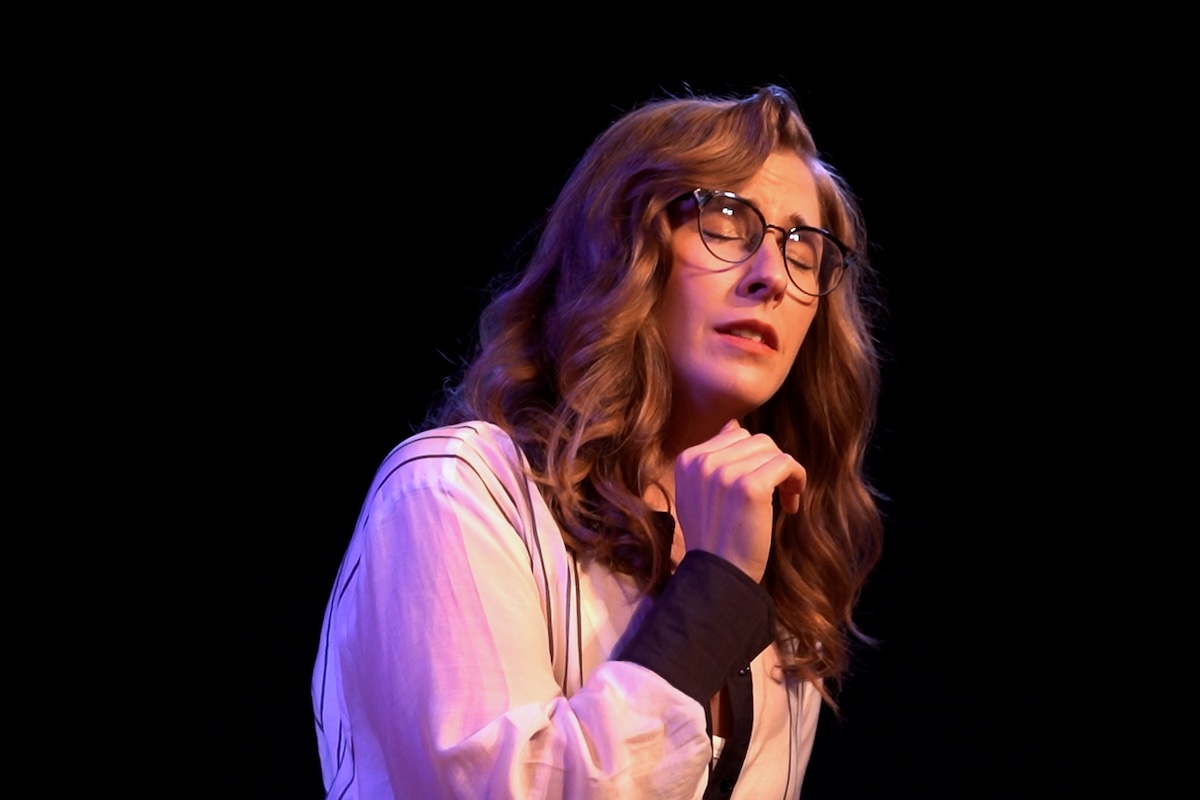
Luisa Tarnawski in The Marriage of Figaro. Photo © Liam Jackson/Crossfade Photography
Translated to the present day, the setting was a deluxe home owned by Figaro, a billionaire entrepreneur. Costuming was everyday wear; Susanna wore a dark green equestrian polo top. The vocal cast’s enthusiasm was infectious, and their spirited solos soared in the welcoming space. A small band, led by accomplished violinist Courtenay Cleary and including clarinettist Rihanna Wilchut and Willison on bassoon, realised the bubbly score.
Luisa Tarnawski (the Countess) sang with marvellous strength and finesse. Gabrielle Diaz (Susanna), Dallas Tippet (Figaro) and Zachary Vella (the Count) also acquitted their roles distinctively and were supported by the engaging Chronicle Singers. Nick Kirkup, as Basilio, blew the roof off.
Rising Stars on Saturday morning was a concert of extraordinarily high standards. ATC Trio gave a heartfelt, lovingly detailed account of Schubert’s Piano Trio No. 1 in B-flat major. Blessed by elegant phrasing, the peaks of which had a luxurious emphasis, the trio’s tone quality and unity impressed. Piazzolla’s Otoño Porteño was replete with stretchy rhythm, and the music breathed rewardingly. This trio has come third for two years running in Musica Viva’s Strike a Chord Competition.
The Incredibows played the first movement of Tchaikovsky’s String Quartet No. 1 in D major with masterful control and exquisite shaping. Finally, the quartet and the ATC Trio were joined by violist Holly Shelton. Seventeen-year-old Ein Na led an outstanding performance of the first and fourth movements of Mendelssohn’s String Octet in E-flat major. A prolonged standing ovation greeted this performance.
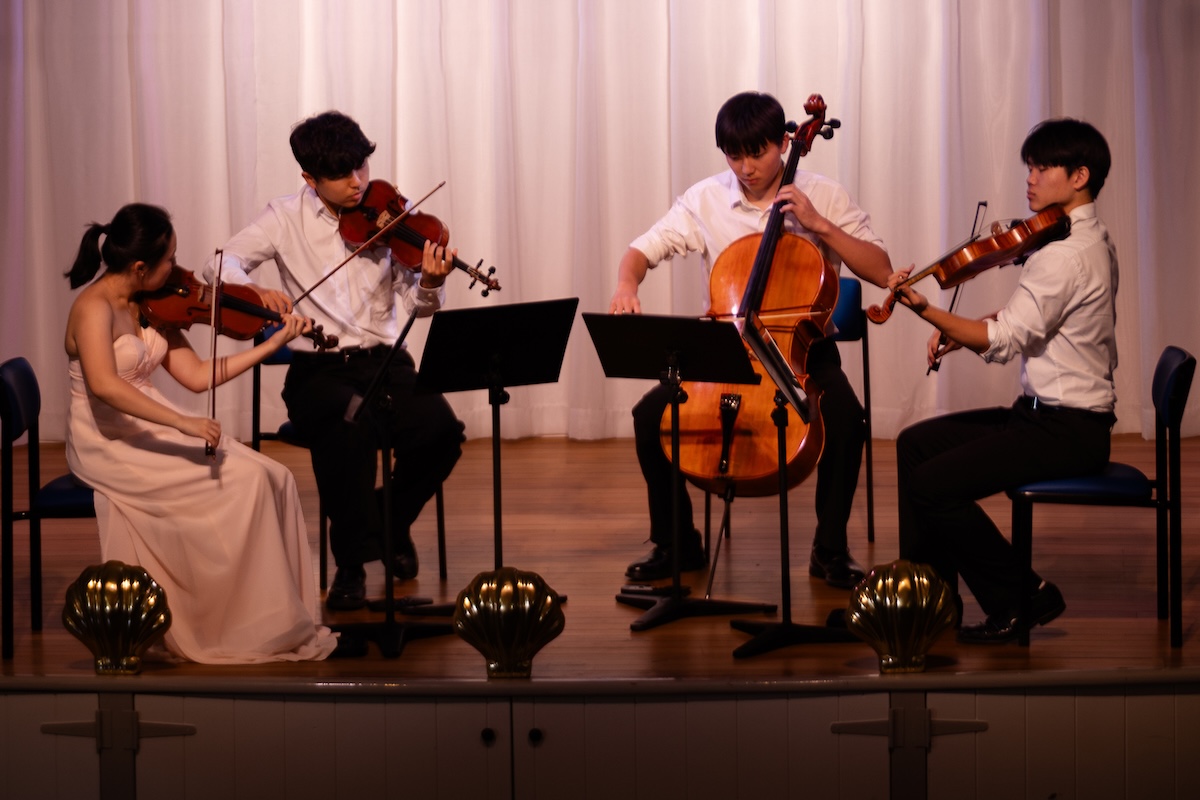
Rising Stars: The Incredibows. Photo © Liam Jackson/Crossfade Photography
The next event featured two chamber music favourites, Schubert’s Trout Quintet in A major and Mozart’s Oboe Quartet in F major. The standout was the Mozart, with oboist Eve Newsome’s eloquent and assured airing of the oboe line’s joyful lyricism and challenging, meandering passagework. The quartet’s sound, with the masterful Patrick Murphy on cello, was well balanced, producing an ear-pleasing ensemble.
It was a pity that the swimming resonance of the hall worked against the promising performance of Façade, which was intermittently compromised by balancing issues. The instrumentalists, among them trumpeter Sarah Butler and percussionist Jason Connors, were in fine fettle, while the narrators Tashana Hardy and Greg Massingham had plenty of zest and rhythmic panache. Placement of Massingham’s mic seemed too low, but more importantly, the stage’s confined space couldn’t accommodate the band.
There were two superb recitals. The first, on Sunday morning, featured harpist Emily Granger, whose unusually beefy sound, varied tonal colour and characterful playing thrill audiences. She showcased works by women composers, including Emily’s Suite by Alice Chance, punctuated by a squawking parrot and the occasional creak of the hall’s roof. Other pieces were Come to Me by Anne Cawrse, Perhaps Tomorrow by Sally Greenaway and Hilary Kleinig’s A Thing of Beauty.
Later, the spotlight shone on Konstantin Shamray. His spirited delivery of Chopin Études was virtuosically charged. Shamray’s preferred interpretation of these Études was necessarily curtailed because of the need to illustrate the dramatic scenes and emotional arc of The Magic Piano. Nevertheless, it delighted the audience.
After this, Shamray’s soulful, superbly controlled and authentic rendering of a Shostakovich Sonata was exceptional. His encore of Scriabin’s Sonata No. 7 demonstrated ferocious athleticism combined with a massive dynamic range, and the outcome was soul-stirring drama.
The much-anticipated final concert of the 34th edition of the festival was a Baroque special, which celebrated individual talent apart from the introductory Orchestral Suite No. 2 in B minor by J.S. Bach.
Vivaldi’s Cello Concerto in C minor featured the remarkably talented youngster Patrick Phillips as soloist, while Handel’s Harp Concerto in B-flat major starred Granger. Winter and Summer from Vivaldi’s The Four Seasons showcased Cleary’s expressive violin soloing.




Comments
Log in to start the conversation.