


Created by some of Australia’s leading artists, Watershed: The Death of Dr Duncan is arguably the most powerful and important operatic work produced in this country in the modern era.
Composed by Joseph Twist, co-written by novelist Christos Tsiolkas and directed by Neil Armfield, this opera-meets-oratorio also has rock-music elements and solo dancer. It’s part live documentary, part sacred memorial to a man whose murder marked a turning point for LGBTQI rights in Australia and beyond.
For its Melbourne debut, the original 2022 Adelaide production is presented by Opera Australia and revival director Dr Cheryl Pickering. It’s simply but strikingly staged.
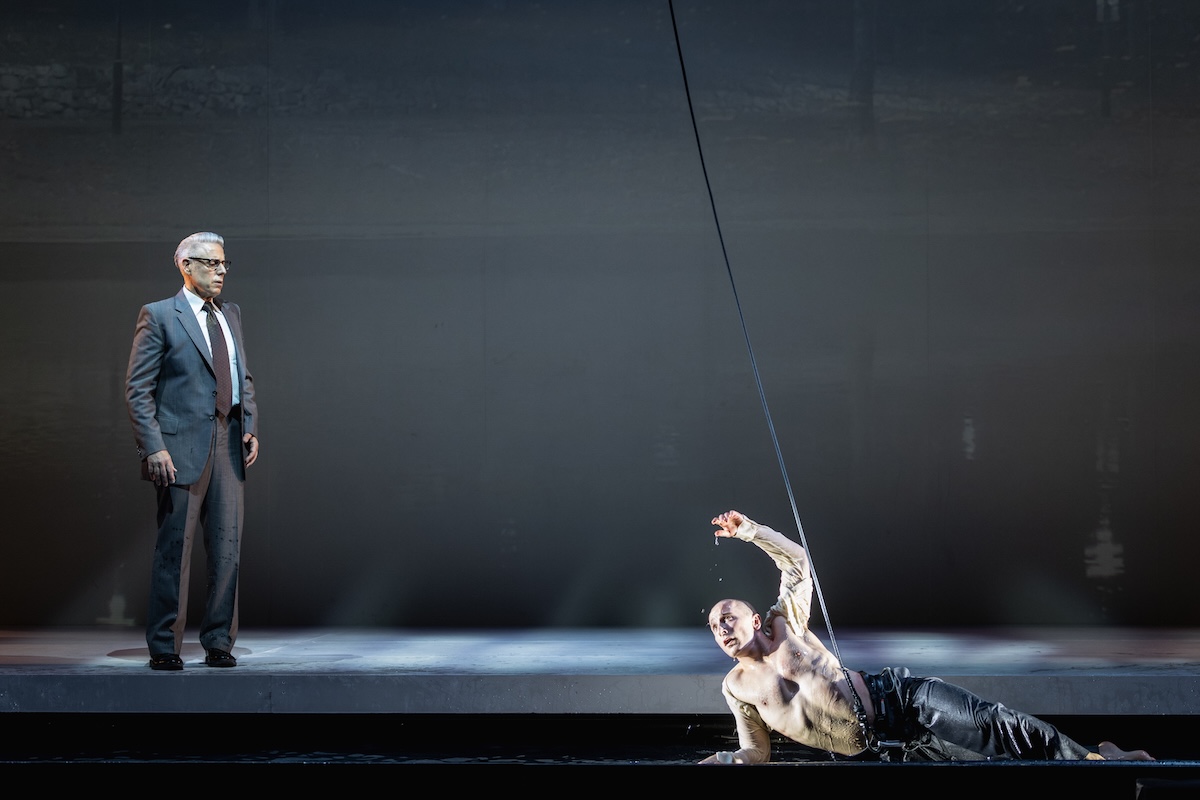
Mark Oates and Sebastian Geilings in Opera Australia’s Watershed: The Death of Dr Duncan 2026. Photo © Ben Fon
Watershed: The Death of Dr Duncan premiered steps from where its subject drowned in the River Torrens 50 years earlier. The University of Adelaide law lecturer was the victim of a gay-hate crime allegedly perpetrated and covered up by police.
Drawing on public records and private testimony (gathered by historical consultant Tim Reeves), librettists Tsiolkas and Alana Valentine inform, confront and move the audience with words veering from raw to poetic. They mostly focus on what happened after the death of Dr Duncan (who they point out was not the first or last victim of “poofter bashing”).
There’s the outcry from a public that’s uncomfortable with homosexuality but recognises the need for justice. The rise of gay pride. South Australian politicians, including Premier Don Dunstan, struggling for three years to decriminalise homosexuality (before any other Australian jurisdiction). The investigation, inquest and trial that leave this crime officially unsolved.
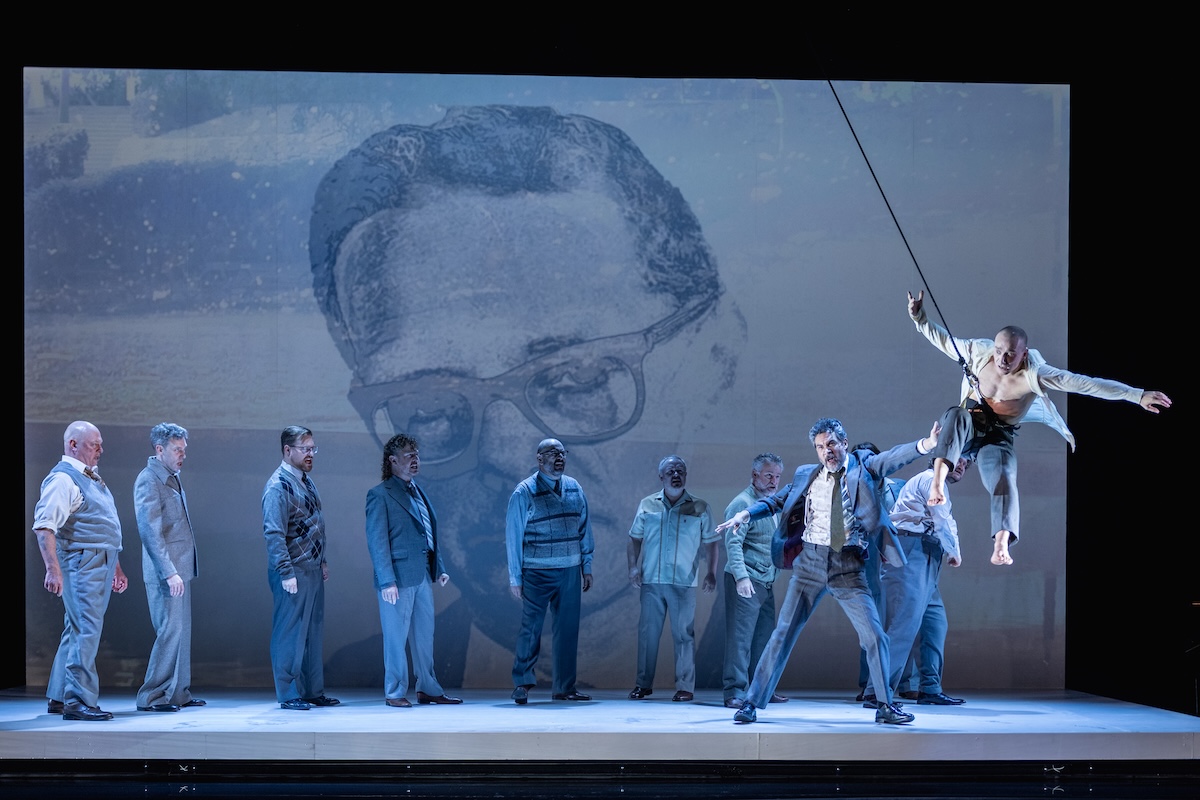
Pelham Andrews, Sebastian Geilings and Opera Australia Chorus in Opera Australia’s Watershed: The Death of Duncan 2026. Photo © Ben Fon
Twist is extraordinarily versatile, having composed music for everything from TV’s Bluey to the Choir of Trinity College Cambridge. Watershed itself is remarkable for its diverse forms and influences, woven together into a richly textured, engaging score.
Under the baton of leading Australian choral conductor Brett Weymark, members of the Opera Australia Chorus interpret choral music reminiscent of Bach and Britten with exquisite clarity and expressive dynamics; some step out for short, confident solos as minor figures in the story. The 12-strong Orchestra Victoria ensemble deftly navigate a score that sometimes recalls Sondheim or Pink Floyd, among others.
Mark Oates’s clear, sweet tenor rings true as Duncan and Dunstan, while the warm bass of Pelham Andrews gives emotional weight to supporting roles such as whistle-blower police officer Mick O’Shea.
As Everyman figure and narrator the Lost Boy, actor-singer Blake Appleqvist gives us elevated musical theatre; a pure tenor, capable of gorgeously sustained notes, and sensitive interactions with dancer Sebastian Geilings.
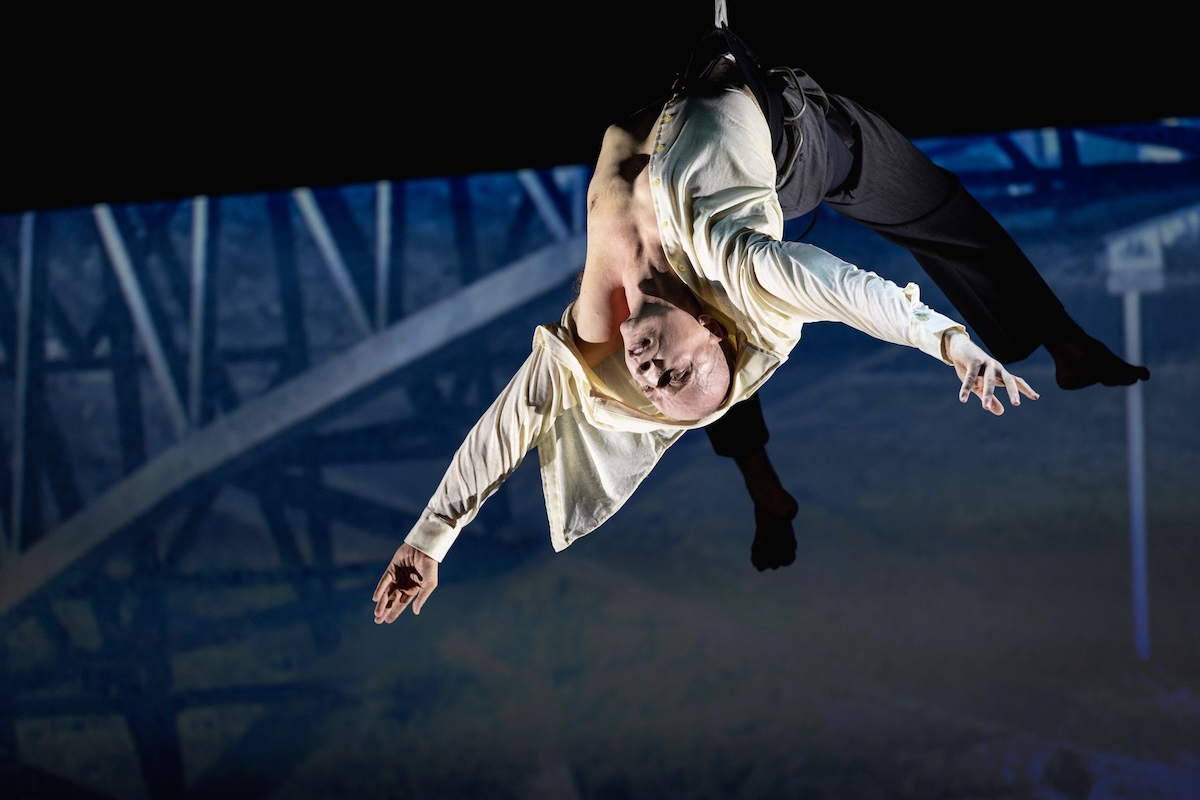
Sebastian Geilings in Opera Australia’s Watershed: The Death of Dr Duncan 2026. Photo © Ben Fon
The elegiac embodiment of Duncan, Geilings is often Watershed’s visual focus; never more so than the opening minutes when, suspended by a cable, he descends toward the stage as if drowning in slow motion.
Later, Lewis Major’s choreography sees him shoved around and above the central platform of Aisla Paterson’s set, and with dramatic splashes, moving dynamically through the shallow moat stretching across the front of the stage.
Geilings’s initial, arresting descent is reversed in Watershed’s transcendent, hopeful finale as he ascends, still and serene, to the heavenly sound of strings and choir. It’s like an apotheosis – one of several references to Christian art that Armfield offers, including the pietà with Appleqvist cradling Geilings’s body.
Paterson’s costumes are mostly sensible suits, skirts and blouses in dreary pale browns and grey that evoke the era’s conservatism. Sean Bacon’s video design projected on a screen upstage also takes us back in time with grainy newspaper clippings and photos. Video of the River Torrens is initially CCTV-like black and white, but ultimately in life-like colour for that hopeful finale.
Exploring a watershed moment for Australian society, this work is also a watershed in contemporary Australian opera. Don’t miss it.
Watershed: The Death of Dr Duncan is at the Playhouse, Melbourne, until 28 November.







Comments
Log in to start the conversation.