




For Ying Fang, the starting point for Canteloube’s Songs of the Auvergne is a single song: Baïlèro. She describes it as “one of the most beautiful songs ever written”, but her fascination with the cycle extends beyond the melody itself.
In Canteloube’s settings, she hears a landscape, a culture and a particular way of life.
“Canteloube didn’t just transcribe folk tunes, he captured the light, the colour, and the breathtaking landscape of the French mountains, along with the love and wit of the people who lived there,” Fang says. “What makes this music so distinctive is how it pairs that raw, rustic human spirit with lush, impressionistic orchestral colours.”
Fang returns to Sydney in October to perform the cycle with the Sydney Symphony Orchestra and Principal Guest Conductor Sir Donald Runnicles, following her Sydney Symphony debut with Runnicles in 2024. The concert also includes Darius Milhaud’s Le Bœuf sur le toit and Brahms’ Fourth Symphony.
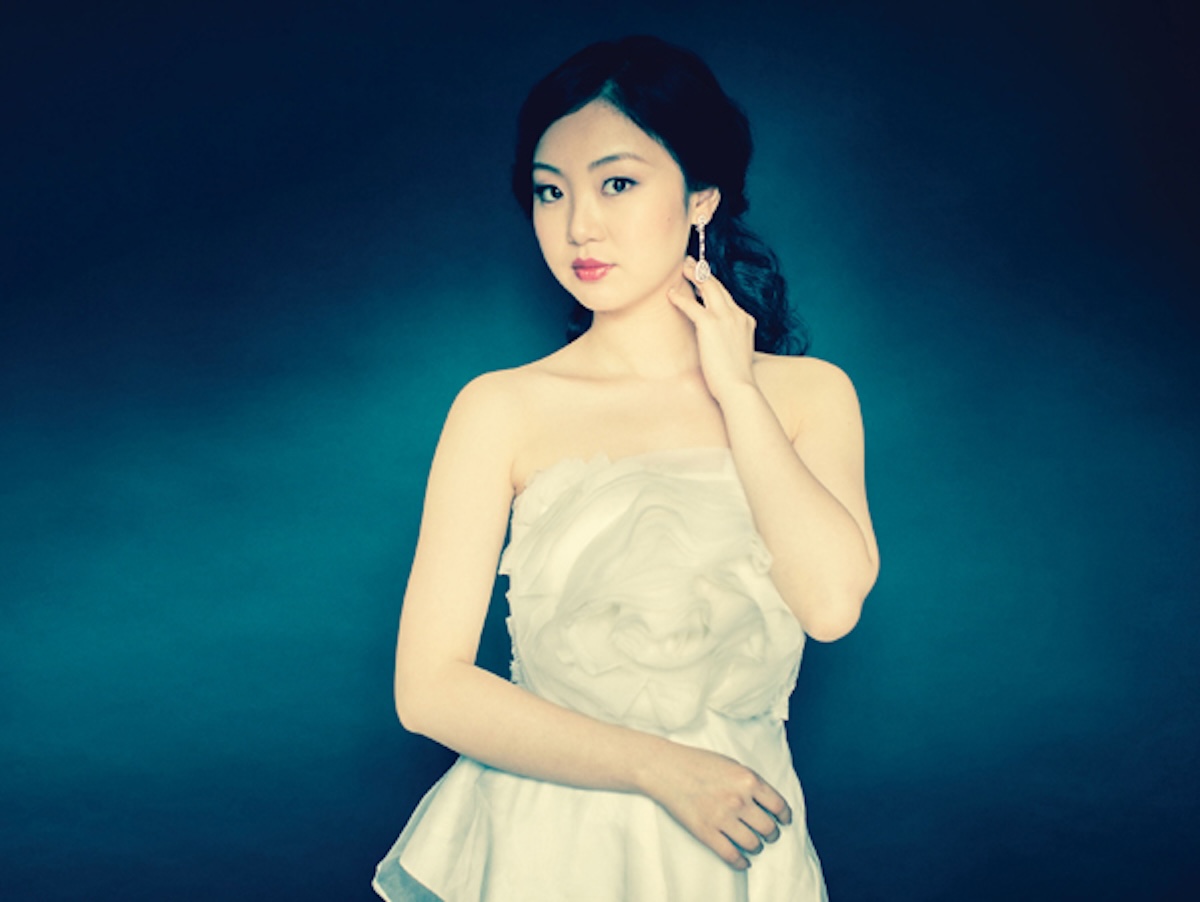
Ying Fang. Portrait © Dario Acosta
Written between 1923 and 1930, Canteloube’s 27 Songs of the Auvergne draw on folk melodies from the Auvergne region of central France. Their subjects are often modest: shepherds, lovers, animals, rivers and the rhythms of rural life. But Canteloube’s orchestral settings transform the songs into something expansive, surrounding the voices with richly coloured evocations of the landscape.
For Fang, who was born in the north-eastern Chinese city of Ningbo – a world away from the Auvergne that so captivated Canteloube – the challenge is to retain the directness of the folk material while allowing the sophistication of the orchestration to speak.
“It requires a delicate balance,” she says. “My goal is to tell the story as if it were my own: both emotionally and vocally, and to let the inherent magic of the folk melody float effortlessly above Canteloube’s orchestration.”
The language presents another challenge. The songs are not in standard French but in Auvergnat, a dialect of Occitan, a Romance language spoken by hundreds of thousands of people in southern France, Monaco, parts of Italy, and the Val d’Aran in Spain. Fang says she has embraced its particular sounds.
“Occitan, and specifically the Auvergnat dialect, has a wonderful, grounded resonance,” she says. “It possesses the open vowels and legato of Italian, shares its vocabulary roots with French, and features crisp consonants that give it a rich earthiness.”
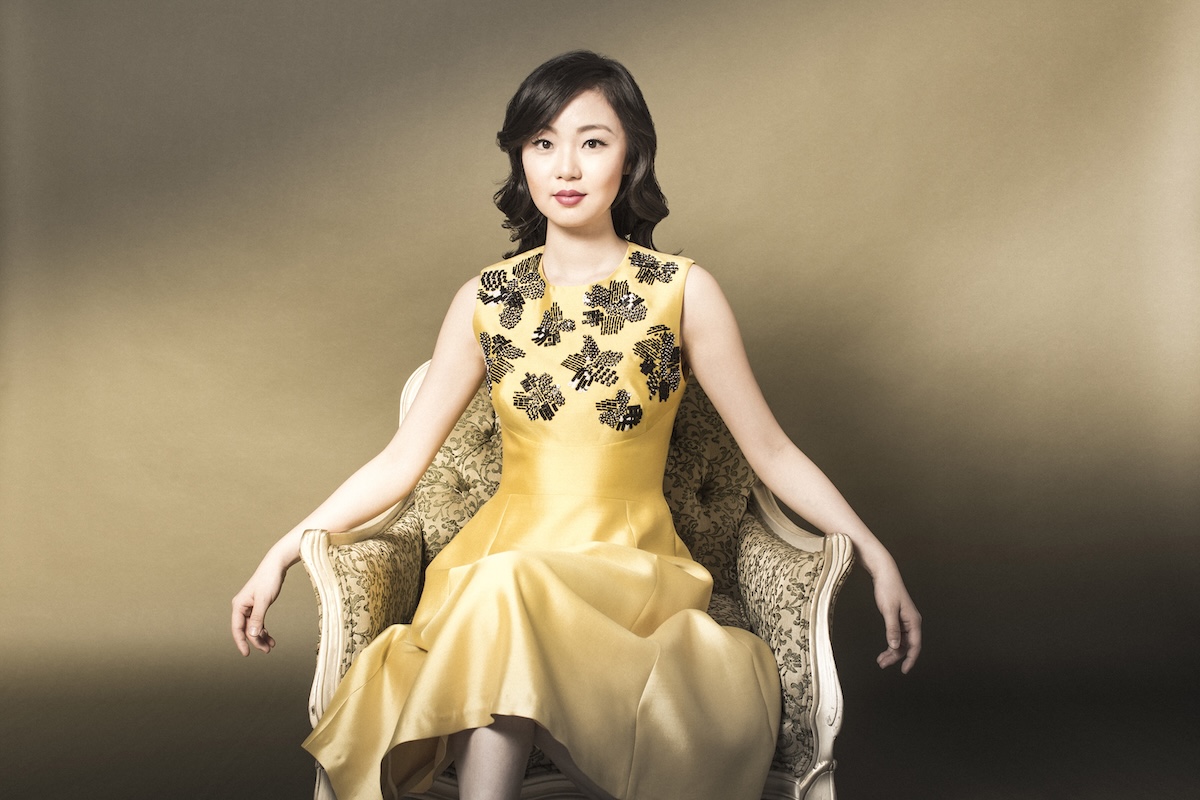
Ying Fang. Portrait supplied
In some quarters, perhaps, the idea of a Chinese-born singer singing intensely local French repertoire might arouse questions of authenticity, of a true connection to a culture. Fang rejects the idea that one’s ability to fully engage with the works should be determined by birthplace or ancestry.
“To me, true authenticity isn’t about where you are born or your ancestral roots, it is about empathy, respect, and emotional honesty.”
“When I approach music from a culture outside my own, my responsibility is to honour the linguistic precision and stylistic traditions meticulously, while bringing my genuine emotional truth to every line.”
Fang says she approaches both opera and song via the relationship between text and musical line. Rather than treating the words as something to be fitted into an already established musical interpretation, she sees the composer’s phrasing as a means of revealing the emotional substance of the text.
“When I learn a piece, the musical line and text usually arrive together,” she says. “The composer’s phrasing naturally reveals the emotional core of the words. My job is to decode those musical clues and infuse my own vocal and emotional resonance into the piece.”
That concentrated relationship between voice, text and orchestra is one of the attractions of the song cycle for Fang. Opera offers the extended arc of a character, played out through theatrical interactions, staging and costume. A song cycle compresses that storytelling into a much smaller space.
“In opera, we inhabit a single character’s arc across several hours,” she says. “An orchestral song cycle, on the other hand, offers direct, immediate, concentrated storytelling.”
Within half an hour, a singer can move through multiple landscapes and emotional states. “Where opera is cinematic in scope, a song cycle is like a curated gallery of fine art,” Fang says.
Ying Fang sings Songs of the Auvergne with Sydney Symphony Orchestra, 8-10 October, Concert Hall, Sydney Opera House.




Comments
Log in to start the conversation.