While only the “Emperor” Concerto is advertised, this SSO concert is something of a mini-Beethovenfest. Under Simone Young’s direction, we heard his Symphony No. 1 and Piano Concerto No. 2, as well as the Concerto No. 5, the “Emperor”.

The pianist was Javier Perianes, who gave an impressive solo recital two nights earlier in the same concert hall.

A Classical-period-sized Sydney Symphony Orchestra responded with precision to Young’s batonless conducting. She has a distinctive way of shaping phrases with great clarity, using expressive hand gestures. This was not a performance of historically informed practice, but it was elegant and well proportioned nonetheless.

Precision marked the first movement, where Young took the repeat. In the refined counterpoint of the slow movement, her approach could be labelled aristocratic. By contrast, the third movement moved at a good lick, especially in the opening theme. (It was reined in with the entry of the two horns.)

The delightful finale was pure joy, an emotion that Beethoven gradually abandoned later in his composing life. This was a lovely performance of a work that is a minor masterpiece, overshadowed only by Beethoven’s major masterpieces.
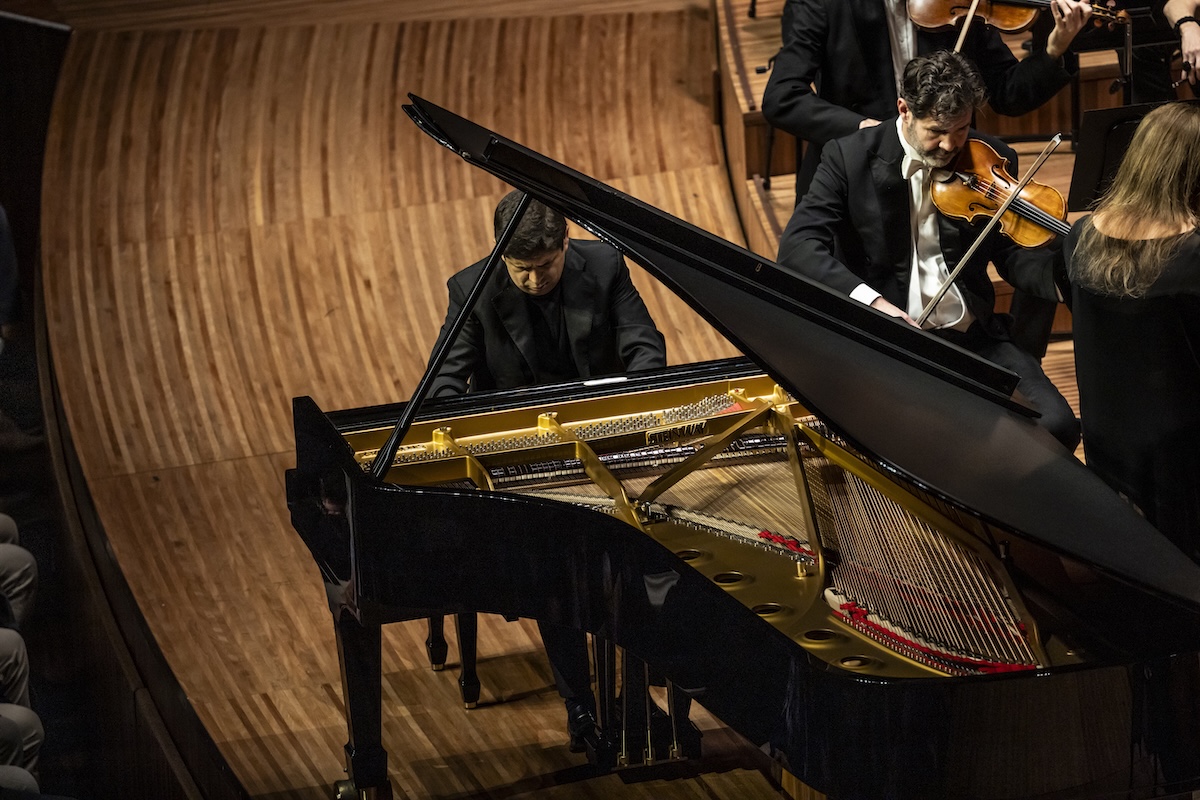
Javier Perianes and the Sydney Symphony Orchestra. Photo © Sydney Symphony Orchestra

No. 2 in B♭ is actually my favourite among Beethoven’s five piano concertos – six, if you count the composer’s hasty arrangement for piano and orchestra of his Violin Concerto.

Another early work, it predates Piano Concerto No. 1 (composed later but published first). The Second is full of sparkling scale passages, which Perianes tossed off with extraordinary evenness, polish and speed. As is his wont, he also emphasised the lyrical moments with smooth legato playing of considerable subtlety.

However, there is a muscularity inherent in Beethoven that was not present in this reading. I felt the pianist could have been more rhythmically incisive, particularly in the acoustic of such a large hall. Also, the Romantic mannerism of deploying a diminuendo at the end of a melodic phrase does not suit this Classical concerto.

The triumph of the evening was undoubtedly the “Emperor”. This piece deserves power, and got it from both Perianes and the orchestra. He and Young were in total interpretative sync, and the music was more strongly projected than in No. 2.

When Perianes employed his exquisite quiet textures, they felt earned because of the potency that surrounded them. The hypnotic transitional passage from the slow movement into the finale was rendered with breathtaking beauty – a deeply moving moment.

In the Rondo finale itself, contrasting passages were played with a real sense of discovery, and here Perianes’s polish was nothing but an asset. The orchestra was excellent all evening but supremely on its toes in this concerto, with characterful woodwind playing. (The winds have more to do in this later work.)

Overall, a very enjoyable program, and a welcome outing for Beethoven’s First Symphony in particular.


Sydney Symphony Orchestra presents Beethoven’s Emperor Concerto in the Concert Hall, Sydney Opera House until 25 July.

Contribute to Limelight and support independent arts journalism.