


“Mr Bassman, you got that certain somethin’, Mr Bassman, you set that music thumpin’ … ” So ran the lyrics of a hit pop song from the 1960s and Sydney Symphony double bass player David Campbell put this to the test when he curated the last of the Cocktail Hour series for the season.
The intimate concerts in the Utzon Room, which match programs compiled by SSO musicians to some very nice drops from a local cellar door, have become so popular with subscribers that next year they will be extended to Thursday evenings as well as the current Fridays and Saturdays.
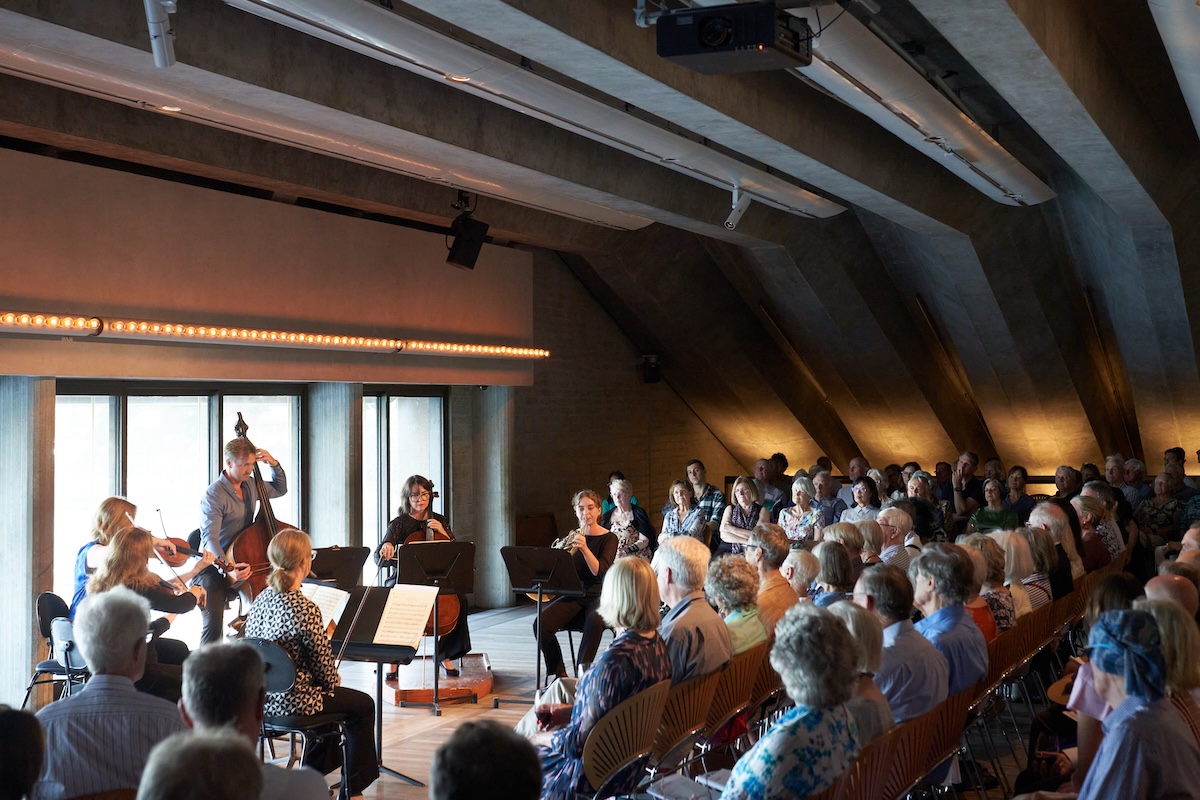
David Campbell and colleagues in the Utzon Room, Sydney Opera House. Photo © Jay Patel
Campbell’s program, featuring nine musicians and three bass-driven and rarely heard works, shows why the series is the first to get booked out. It started off with some nuevo tango – Astor Piazzolla’s Kicho, a piece the Argentine composer wrote for his long-time bassist and collaborator Enrique Diaz.
In this arrangement by Guillermo Soteldo, and opening chord leads to a lengthy bowed bass cadenza which exploits the tone and resonance of the lower strings of the instrument with slides, double stopping, runs and some percussive slaps of the cello before the powerful driving momentum of the tango takes hold.
There is a calmer and nostalgic middle section where Campbell and violinist Emma Jazek duet before the escalating dance returns.
Piazzolla’s compatriot Osvaldo Golijov was an ardent admirer of the bandoneon maestro and was writing a second movement for what would become his tribute work Last Round when he heard about the stroke that would eventually lead to Piazzolla’s death.
Taking inspiration from the older man’s combative stage presence – and well-known propensity for getting into fights – Golijov pits two string quartets against each other with the bass in the middle “acting as referee”.

David Campbell, Utzon Room, Sydney Opera House. Photo © Jay Patel
Full of energy and shifting rhythms and moods, the three movement work calls for precision playing, which the SSO players supply seemingly without effort.
Precision of a different order and intense concentration are also required for the last work on the program, John Adams’s Shaker Loops, more often played by a full orchestra with a conductor guiding the players through the four short movements with their repetitive minimalist cells. Campbell marks time with his bow when not playing, sharing conducting duties with violist Richard Waters.
The chamber version allows you to hear the full intricacies of the work which are sometimes lost in the thicker and more opaque textures of a full orchestra. From the shimmering haze of Shaking and Trembling to A Final Shaking’s ominous bass pulse, this was a mesmeric performance.







Comments
Log in to start the conversation.