




Bryce Dessner’s been “upside down” with jetlag for most of the week, he tells the audience from the stage; in recognition, his second program with the Sydney Symphony Orchestra is to be performed in reverse program order.
Earlier in the week, Bryce Dessner’s Trembling Earth showcased the SSO and Dessner with a full orchestral force; Bryce Dessner and the Sydney Symphony Orchestra offered a more intimate peek (and with Dessner chatting through changeovers, refreshingly informal) at the American composer’s works, from string orchestra to solo piano.
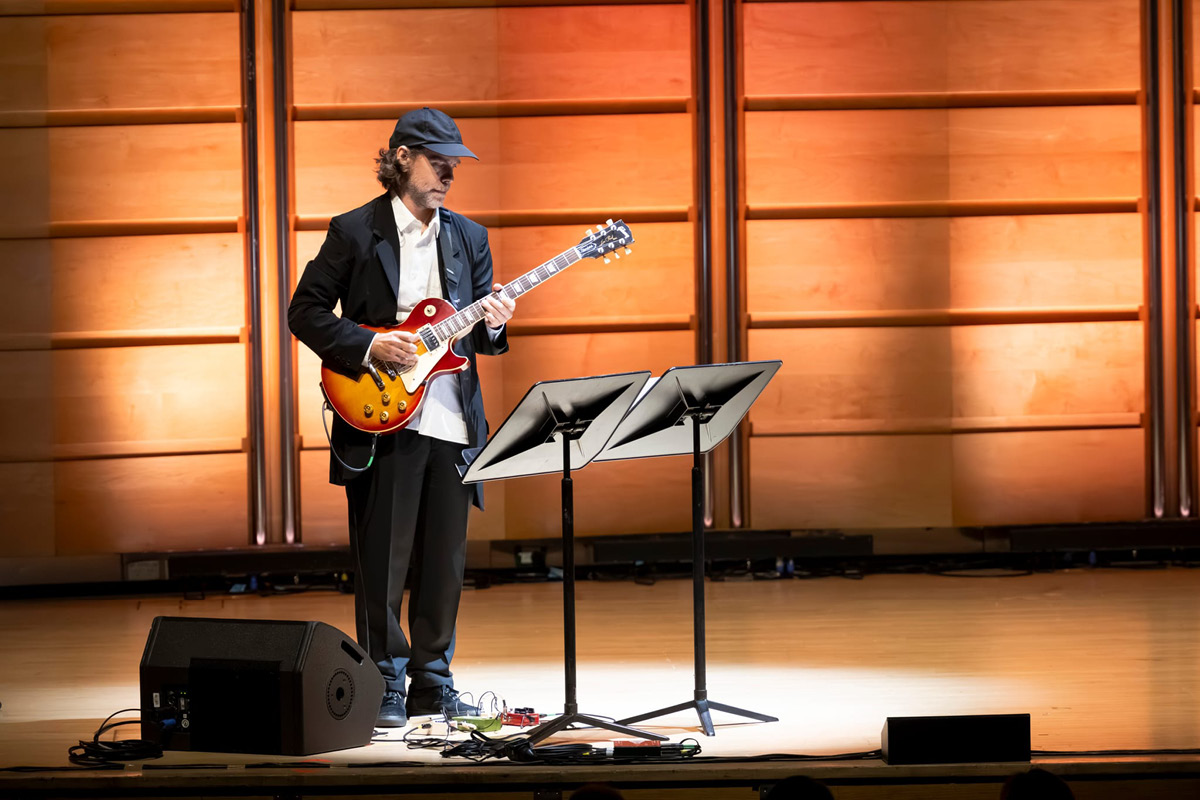
Bryce Dessner. Photo © Cassandra Hannagan
Alongside his contemporary classical work, Dessner is also known for his work as guitarist and songwriter for The National. The band’s music pulls in a classical sort of richness from horn and string arrangements that warm tracks like Pink Rabbits, Fake Empire and Weird Goodbyes, but it’s harder to trace Dessner’s classical language to something as contained as an indie-rock tune (except for the night’s Garcia Counterpoint, but that’s on the tin).
In his music, there are flecks of American minimalism, a 20th-century Russian frenetic energy and a stirring visual imagery. He likes a lot of notes (he tells us, laughing) and leans towards tonality over anything particularly harmonically knotty – he’ll wring out a chord for all colour and texture before it changes. This is all on show in Impermanence Suite, Dessner’s score for a Sydney Dance Company and Australian String Quartet. Here, it’s tackled with fury and delicacy by the SSO’s Alexandra Osborne, Lerida Delbridge, Richard Waters and Simon Cobcroft; even without the visual aspect, the piece stands strong.
Selections from Dessner’s Train Dreams, perhaps a little less so – that and a handful of solo piano works (with Vatche Jambazian, who was wonderfully impressive) felt a little tamer on stage, but were followed by a stronger chaser.
Garcia Counterpoint is a tribute in equal measure to both Jerry Garcia and Steve Reich (who turns 90 this weekend); Garcia’s licks set in Reich’s poppy, rhythmic style. Here, Dessner’s up to bat with his guitar, a few pedals and a pre-recorded track. It’s a nice beat in the program, and a welcome chance to see Dessner’s sharp guitar chops in close quarters (will the SSO stage ever see an overdrive pedal again?).
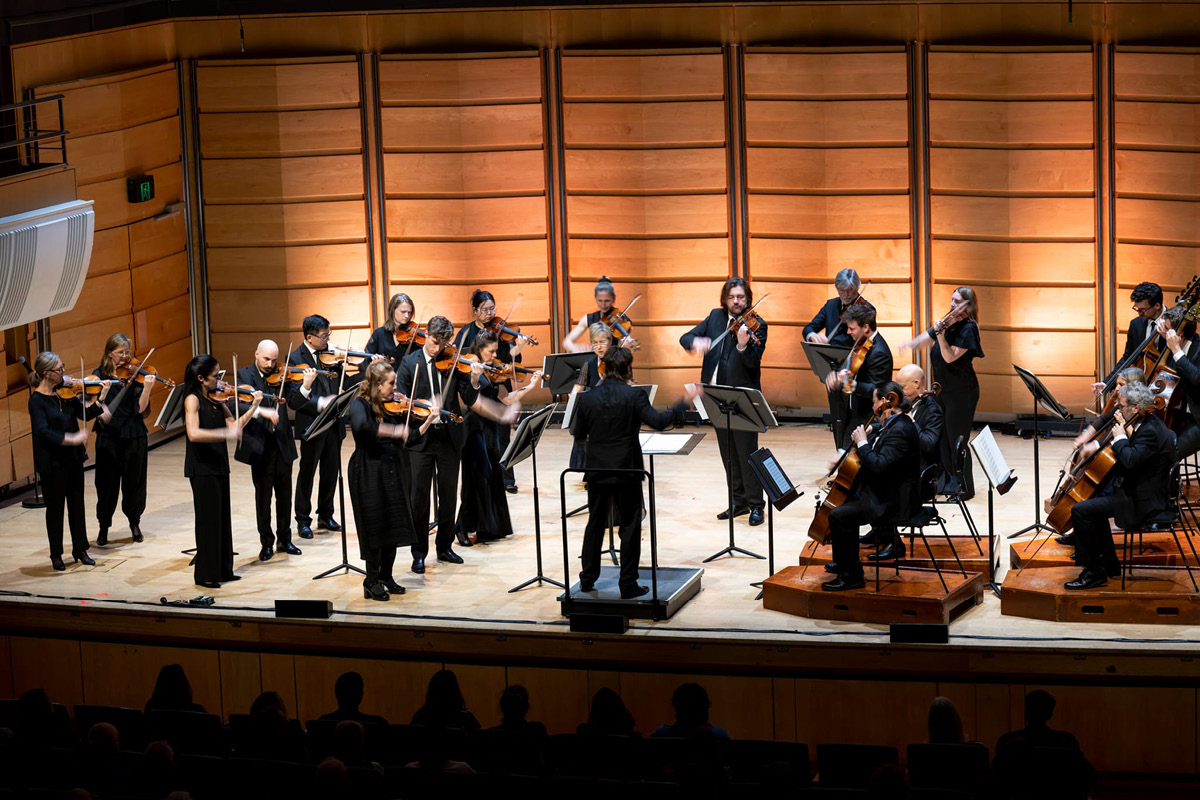
The Sydney Symphony Orchestra. Photo © Cassandra Hannagan
The night’s final two works called for the SSO in string orchestra formation. With a modernist touch, Lachrimae spins eerily out harmonics, weaving in phrases written by Renaissance John Dowland into something that grows more fearsome.
Aheym was the showstopper. It’s so tactile, both sonically and spatially – motifs ripple across the stage. SSO strings make those pugilistic stabs sting; Dessner makes floss out of their bows. Dessner’s at his peak in a work like this – virtuosic, unbridled; music that threatens to break free and outrun its performers. Conductor Sam Weller throws it all behind every phrase for a thrill of a closer.







Comments
Log in to start the conversation.