The China National Opera House made a delicious debut in the Sydney Opera House Concert Hall on Sunday evening with a perfectly curated Opera Gala; the first half read like a wine list, taking listeners on a journey from champagne to merlot.
The night began with the sparkling flair of Mozart’s iconic Eine kleine Nachtmusik. From the first chord, the chamber orchestra demonstrated vigour and excitement. Importantly, however, its controlled choice of tempo was excellent, balancing the work’s sense of wonder with accuracy and nuance. Conductor Yuan Ding knew exactly when to give the perfect impulse to his musicians, then let them create the rest of the magic.
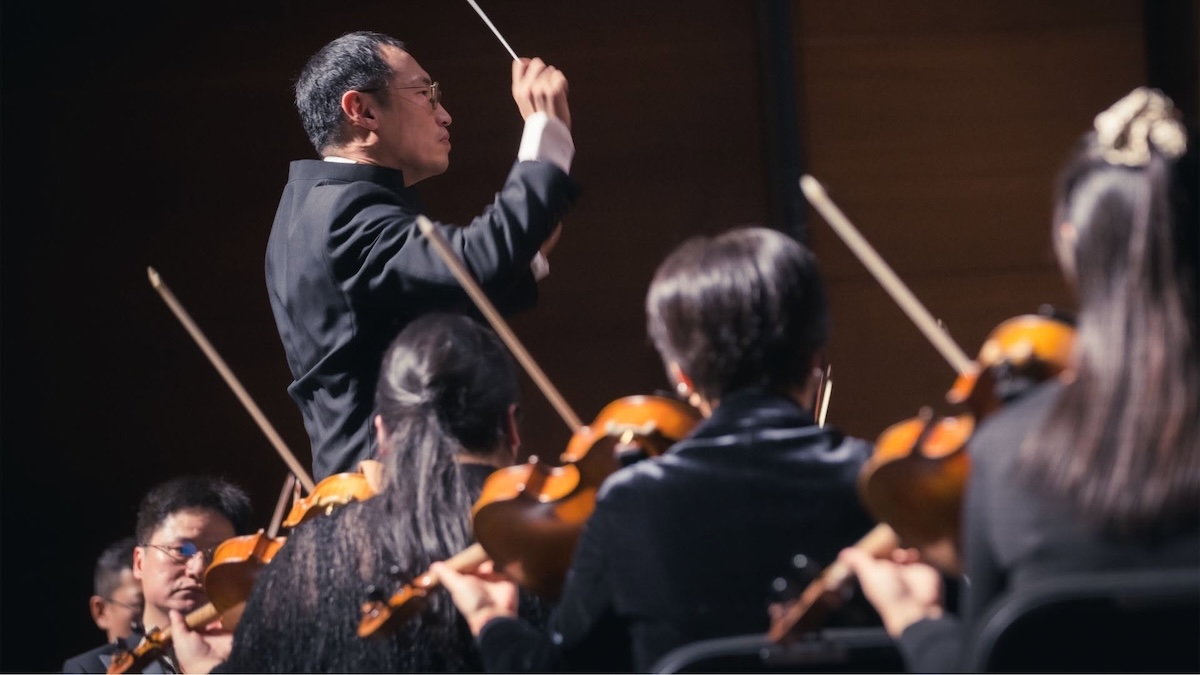
China National Opera House conductor Yuan Ding. Photo supplied
Bass Song Fengrun was next with Sarastro’s “In diesen heil’gen Hallen” from The Magic Flute, bringing on the sauvignon blanc: light yet welcoming. His regal yet gentle presence remained true to the style while also being relatable.
Next came our pinot gris: the sweet lovebirds of the “Pa-Pa-Pa” duet. Soprano Wang Ye and baritone Geng Zhe displayed excellent comic timing and hilarious stage presence. Combined with their light-hearted phrasing and fluttering articulation, I couldn’t help but wear a beaming smile throughout.
Pivoting to Italian opera, tenor Han Junyu sang La Traviata’s “De’ miei bollenti spiriti”, his tone creating a celestial presence, while the accompaniment seemed to orbit him like planets. This was the rosé of the evening, balancing the tragedy of Verdi’s opera with the aria’s glimmer of hope as it floated above the orchestra.
Then came the reds. The tragically beautiful “Parigi, o cara”, sung by soprano Li Jingjing and Han Junyu, showcased excellent storytelling through both the singers’ stage presence and the orchestra’s dedicated phrasing.
Our first French cabernet sauvignon of the evening arrived with tenor Li Shuang’s Flower Song from Carmen. It came at just the right moment, offering a welcome contrast to Han Junyu’s celestial imagery with something a little more down-to-earth. His voice suited Don José’s rustic character perfectly, while the gorgeous cello countermelody enriched the dolce, romantic atmosphere.
The next two numbers truly showcased the versatility of Geng Zhe and Wang Ye. Geng Zhe was the true crowd-pleaser of the evening, engaging the audience in the ever-popular Toreador Song. It was thrilling to watch him transform from a flighty Papageno into a commanding bullfighter. Similarly, Wang Ye’s voice transformed from Papagena into liquid gold, shimmering alongside tender cello and viola soli in “Vissi d’arte” from Tosca.
The first half concluded with an umami bomb: “Au fond du temple saint” from Bizet’s The Pearl Fishers. Bold and richly spiced, it was thrilling to hear the woodwind, brass and percussion raise the temperature in the concert hall. The duet steadily built tension and excitement, culminating in a loud cheer from the audience just before the interval.
The second half offered something truly special for Australian audiences: China’s beloved tradition of Peking opera at its finest.
Soprano Wang Qingshuang sounded like a choir of bells as she sang “The North Wind Blows” from The White-Haired Girl. The audience chattered with delight as she performed “Who Doesn’t Praise My Beautiful Hometown”, with many clearly feeling a rush of nostalgia for China’s beauty and history.
The orchestra displayed an entirely different flavour as melodies were embellished with ornaments evocative of traditional Chinese instruments in “Liang Xiao”, “Deep Friendship” and excerpts from the Butterfly Lovers Violin Concerto. The violins were superb, combining the expressive qualities of traditional Chinese music-making with European classical virtuosity. The audience couldn’t help but hum along to the whimsical waltz and galloping polka of “Deep Friendship”.
The chamber orchestra’s electricity was now fully on display and was led expertly by concertmaster Du Xuan in the crowd favourite, the Butterfly Lovers Violin Concerto. Du Xuan’s storytelling and clarity of artistic purpose had been quietly evident throughout the evening, making it a particular pleasure to see him take centre stage. His solo flourishes sparkled like morning dew, yet he effortlessly resumed his role as supportive leader when the sweeping violin melodies brought the work to its conclusion.
The evening ended with a powerful rendition of “Nessun dorma” and the patriotic hymn “My Motherland”, performed by the full company and chorus. After a remarkable four encores, phone torches swayed throughout the hall, the audience sang along, and Geng Zhe appeared to hold back tears of joy.
Overall, the evening was an electrifying success, particularly given the production’s relatively bare-bones presentation. Perhaps the China National Opera House’s Australian debut will spark discussions about a return to Sydney with a fully staged production or a more expansive program.

Comments
Log in to start the conversation.