

At a prestigious chamber music festival such as the AFCM, there’s an expectation that the performances will be highly informed and skilful. Yet this concert ventured into such emotionally charged territory that the audience was stunned.
There were no throwaway moments offering the chance for thoughts to drift because the musical offering was compelling from the first piece to the last.
Those who were there can’t stop talking about it.
Classical composers do melancholic introspection very well, and it was easy to embrace the nostalgic works in this program of contemplative, moonlit fantasy.
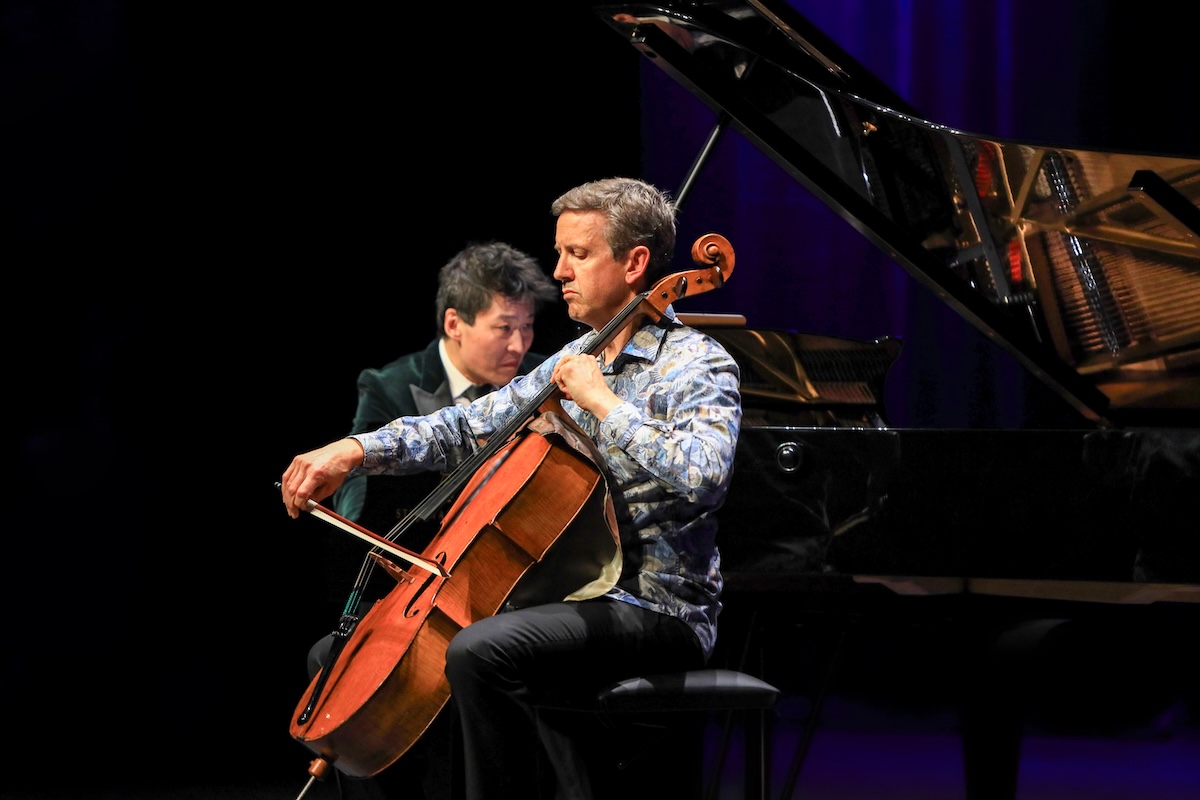
Twilight’s Embrace: Kristian Chong and Julian Smiles. Photo © Paul Furse
Australian composer Margaret Sutherland’s dream of becoming a composer was hindered by her husband, a psychiatrist, who believed that if a woman wanted to create music, it indicated a mental disorder. How gratifying, then, to hear violinist Alexandra Raikhlina and pianist Kristian Chong’s insightful, tender reading of Sutherland’s impressionistic Nocturne for Violin and Piano, which she wrote in 1944.
Composed in 1965, Lennox Berkeley’s Songs of the Half-Light sets five poems by Walter de la Mare. Robin Tritschler’s storytelling and silvery tenor voice revealed Berkeley’s songs to great advantage as he leaned into the imagery with authenticity. Karin Schaupp’s assured guitar accompaniment enhanced the dramatic content.
When Julian Smiles introduced Arvo Pärt’s powerful Spiegel im Spiegel and spoke with heartfelt sincerity about the rapidly changing world and the need for the stillness Pärt’s music generates, the audience was in his thrall. Beginning with Kristian Chong’s luminous piano accompaniment, he closed his eyes and bowed the cello with a wellspring of moving intensity. When the last note died away, there was a prolonged silence before the audience applauded.

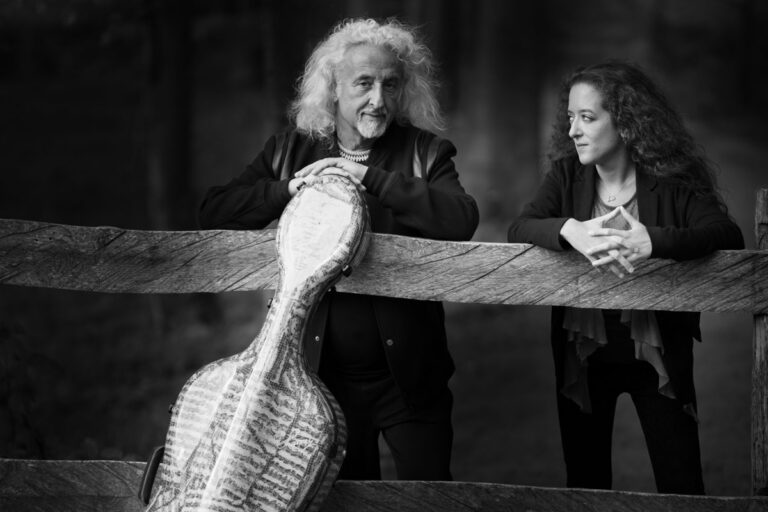
Twilight’s Embrace: The Sitkovetsky Trio
The Sitkovetsky Trio invested each of Bloch’s Three Nocturnes for piano, violin and cello with glorious tone, vivid colour, infectious energy and impeccable unity. The contrasts between the three character pieces were sharply defined, from the mystery of the first, through the soothing balm of the second, to the stormy third nocturne, which the trio communicated with searching, muscular drive.
An experienced Chopin interpreter, Piers Lane introduced the Nocturnes – the C minor, Op. 48 No. 1; the B major, Op. 62 No. 1; and the E-flat major, Op. 62 No. 2 – as if they were old friends. In his performance, he invested each one with poignant, confessional meaning and remarkable textural clarity.
The C minor Nocturne had formidable presence. Lane’s whispered chordal phrases and octave passagework, which lesser pianists often overstate or stumble over, were meticulously executed. The virtuosic flourishes between melodic statements were treated as incidental: no-fuss washes of colour. As he shared his affinity for Chopin’s music with poetic lyricism, especially in the E-flat major Nocturne, the crowd was transfixed and humbled.
An outstanding, unforgettable concert.
The Australian Festival of Chamber Music continues until 1 August

Comments
Log in to start the conversation.