




An apology first of all. It slipped my notice when requesting this assignment that this concert was part of the Symphony Hour series. That means the program was cut down in order to last one hour. While this gave your reviewer time to visit a nearby jazz club (Curtains) for a post-concert cocktail, it meant I missed out on hearing Darius Milhaud’s Brazilian extravaganza La Bœuf sur le toit: possibly the only piece of classical music to have a nightclub named after it. (Milhaud’s work is added to the program in subsequent performances.)
All I can say is, I heard the SSO play this dazzling piece in 1972 under Antonio d’Almeida, and they did it pretty well back then. Former SSO Chief Conductor David Robertson made an excellent recording of it, as did Antál Dorati with the London Symphony Orchestra. Both are highly recommended.

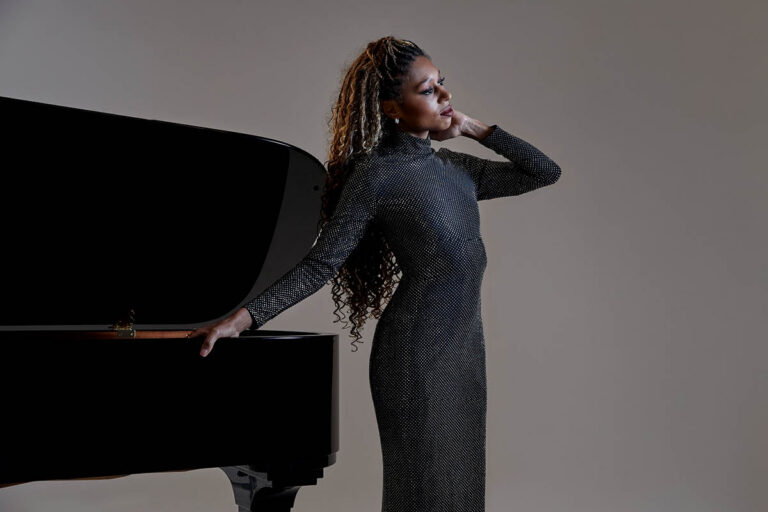
Ying Fang sings Songs of the Auvergne with the Sydney Symphony Orchestra
Tonight’s concert opened with six of the Songs of the Auvergne. This is an extensive series of folk songs from the mountainous Auvergne region of central France. Composer Joseph Canteloube collected them and arranged them for soprano and orchestra during the 1920s. They have been popular ever since. While he did not alter the simplicity of the melodic lines, his voluptuous orchestration and chromatic harmonies are very much of their time.
Many sopranos have recorded excerpts from the five sets of songs, ranging from the authentic folksy style of the late Israeli soprano Natania Devrath to the plush sound of Kiri Te Kanawa. One critic said Dame Kiri’s version was like a sightseeing trip through the Auvergne, as seen from the window of a Rolls-Royce.
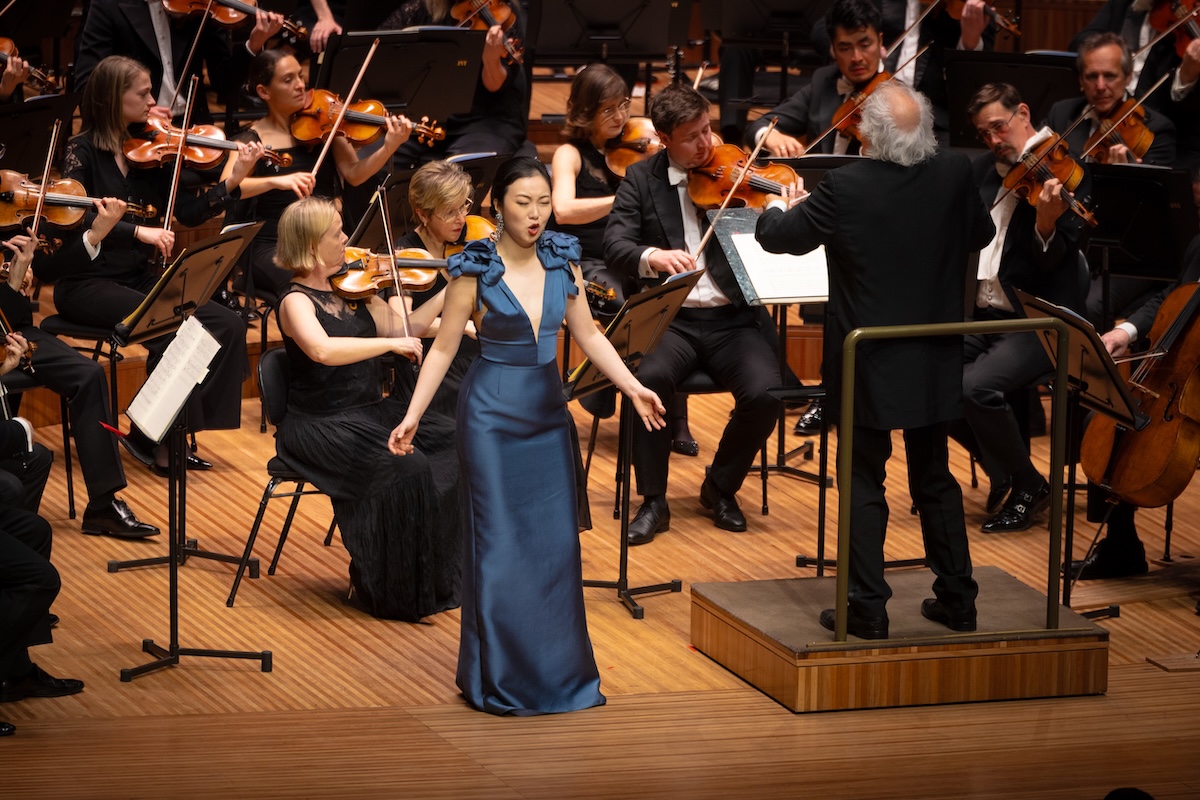
Ying Fang sings Songs of the Auvergne with the Sydney Symphony Orchestra conducted by Sir Donald Runnicles. Photo © Sydney Symphony Orchestra
Soprano Ying Fang, who performed tonight, is much in demand as a Mozartean at the Met in New York. She has the right timbre for this music, with a clear line, silvery tone and narrow vibrato. Baïléro, the best-known of the songs, was beautifully shaped, sung with poise and subtle dynamic shading. However, I did find Canteloube’s huge orchestra swamped Ms Fang occasionally in her lower register, which was not strong enough to cut through.
Donald Runnicles’ command of the musicians, and their playing, were very impressive. I liked his concept of Brahms’ Fourth Symphony, too. This is a big piece and can become ponderous if the third movement (Allegro giocoso) is allowed to plod. Runnicles took the description at its word in a briskly joyous tempo, giving him breathing space on either side for a warm-toned, beautifully lyrical slow movement and a formidable finale. Initially, in the opening movement, I wanted sharper ensemble from the large violin section (24 violins) and a clearer texture generally, but the orchestra soon settled in, and clarity was not an issue from then on.
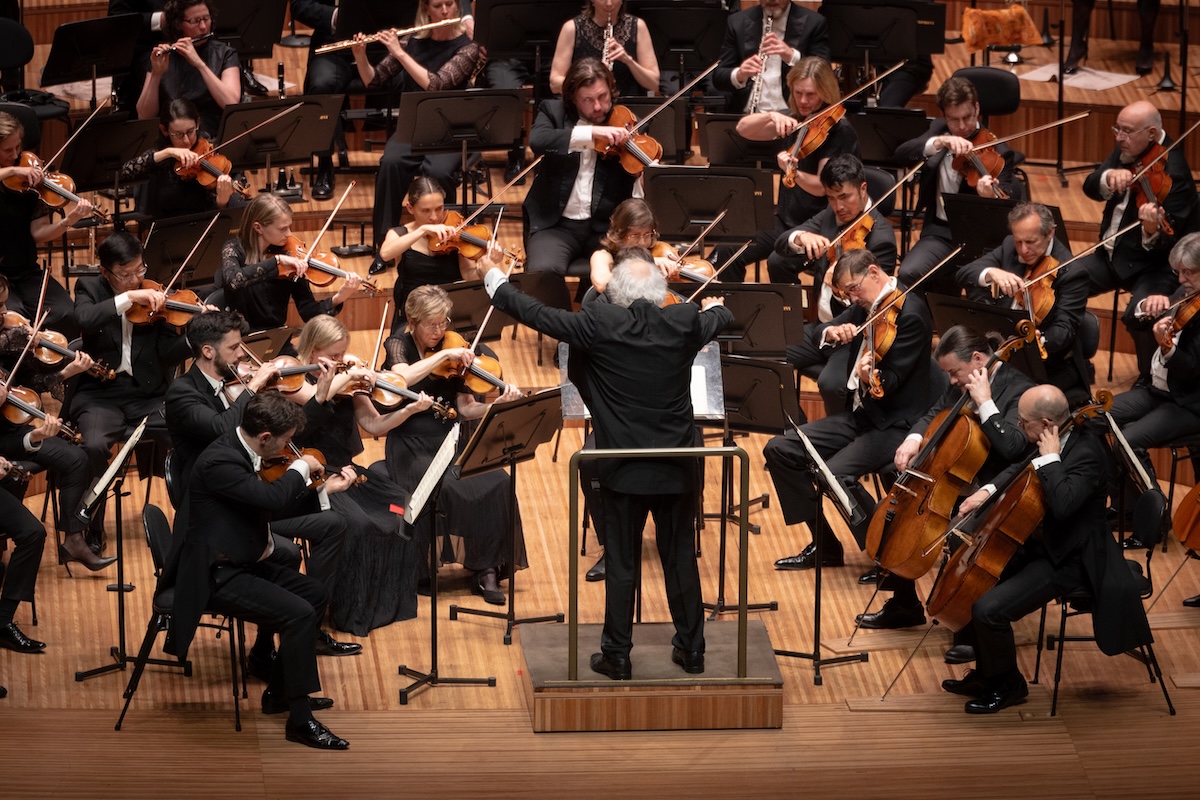
The Sydney Symphony Orchestra conducted by Sir Donald Runnicles at the Sydney Opera House on 8 October, 2026. Photo © Sydney Symphony Orchestra
The build-up to the climax of the first movement was superbly done; so exciting that it encouraged the audience to applaud. They continued to do so after each movement – which simply proves that the one-hour format is attracting a new audience, as it is intended to.
The orchestra was in fine form, notably the woodwinds in the Auvergne songs, while the four horns gave the Brahms symphony that burnished glow it ideally needs. This was an hour well spent.
Sydney Symphony Orchestra presents Ying Fang sings Songs of the Auvergne on 9 and 10 October at the Concert Hall, Sydney Opera House.





Comments
Log in to start the conversation.