Clarinettists have been a potent force for good over the past four centuries.
Mozart wrote his Clarinet Concerto and Clarinet Quintet for his friend Anton Stadler. Hearing Richard Mühlfeld perform brought Brahms out of retirement, and 50 years later the “King of Swing”, Benny Goodman, inspired works from Bartók and Copland.
We have Heinrich Joseph Baermann to thank for Carl Maria von Weber’s two concertos and other showpieces, including the Quintet in B-flat major, Op. 34, which Sydney Symphony’s Alexander Morris chose to feature in the latest of the orchestra’s intimate Cocktail Hours in the Opera House’s Utzon Room.
This is the second of the series to feature Morris who, as Principal Bass Clarinet, is usually seen buried in the heart of the orchestra and who joked that he felt “naked” in this informal setting. Last year he performed Mozart’s quintet, paired with a bravura new work by young Australian composer Holly Harrison.
For this concert he came up with the perfect partner for Weber’s operatic fireworks display in Bernard Herrmann’s romantic and nostalgic Souvenirs de Voyage, written in 1967, a year after the composer’s bitter bust-up with film director Alfred Hitchcock.
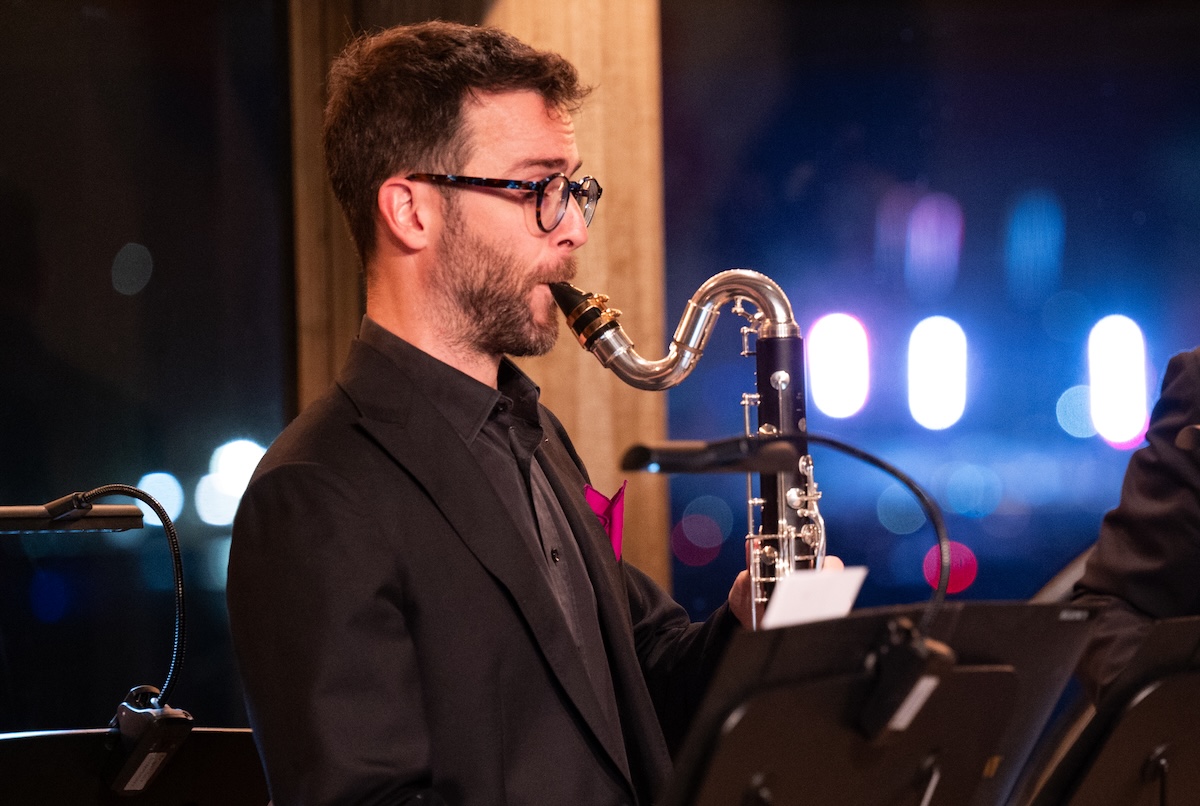
Alexander Morris. Photo © Georgia Griffiths
Morris reversed the order published in the program, setting the scene for the evening with his B-flat instrument, autumnal and sweet, in the opening of Herrmann’s piece. Sercan Danis’s muted violin led Assistant Principal Second Violin Emma Jezek, violist Stuart Johnson and cellist Timothy Nankervis in laying down a lush string texture.
Over its three movements, Souvenirs de Voyage does indeed cover a lot of ground, from summer storms alongside the pastoral nostalgia of the first movement — the New Yorker studied under Percy Grainger and was a great admirer of Ralph Vaughan Williams — to the pull of the ocean in the Berceuse, inspired by J.M. Synge’s play Riders to the Sea, set on the windswept Aran Islands off Ireland.
For the final movement, the sea gives way to the gently rocking canals of Venice. Herrmann, of course, is best known for his film scores, including Citizen Kane and nine Hitchcock classics from the 1950s and ’60s. Listening to this lovely performance, one could quite easily imagine scenes unfolding in black and white.
There is nothing monochrome about Weber’s quintet. It is vibrant with colour, and its virtuosic feats and lyricism come with a strong operatic flavour. Morris was in superb form for the challenging arpeggios and leaping runs across the instrument’s three octaves, from the low, woody chalumeau to the wailing altissimo register.
Jezek swapped seats to lead the strings, all working seamlessly in the tightly knit ensemble passages. The slow Fantasia second movement — which Morris described as being like “an aria where the heroine dies at the top of her lungs from a totally curable disease” — was a highlight, with its interplay between clarinet and Nankervis’s brooding cello, and the soloist’s superbly controlled sotto voce echo phrases.
The whirlwind gallop of the final movement brought this entertaining recital to an exhilarating close.

Comments
Log in to start the conversation.