


Both instruments run on air. The classical accordion and the pipe organ are wind machines, one strapped to the player’s chest, the other built into the fabric of the hall. Holly Harrison calls the accordion “a portable orchestra”. Winthrop Hall’s 1965 J.W. Walker organ is the immovable kind. Set either side of the interval, they made for one of the most enjoyable concerts WASO has given in its temporary university home.
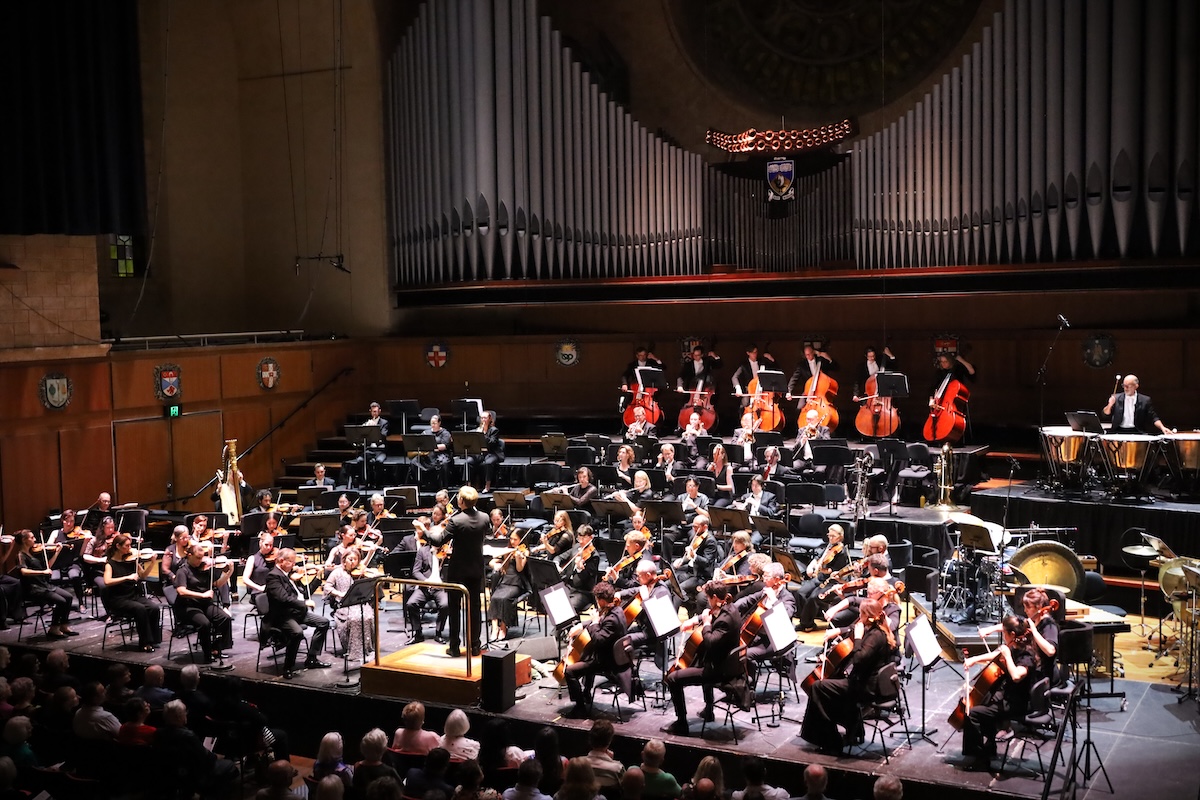
West Australian Symphony Orchestar: Organ Symphony. Photo supplied
Benjamin Northey conducted the world premiere of Harrison’s InsideOut in Adelaide in July and its Hobart outing in October. Perth is the last of the four co-commissioning orchestras to take the concerto up, and Northey steered its grooves with the confidence of someone who knows where every joint in the machinery sits. James Crabb, for whom it was written, wore his virtuosity lightly, the bellows doing as much expressive work as the fingers.
Harrison’s conceit is a set of nesting dolls, the orchestra “continually unpacked from within the accordion itself”. Her palette runs from rock and grunge to electronica and bluegrass. Stretch takes the E7♯9 of Hendrix’s Purple Haze and pulls and compresses it, Crabb’s chords snarling like an overdriven guitar.
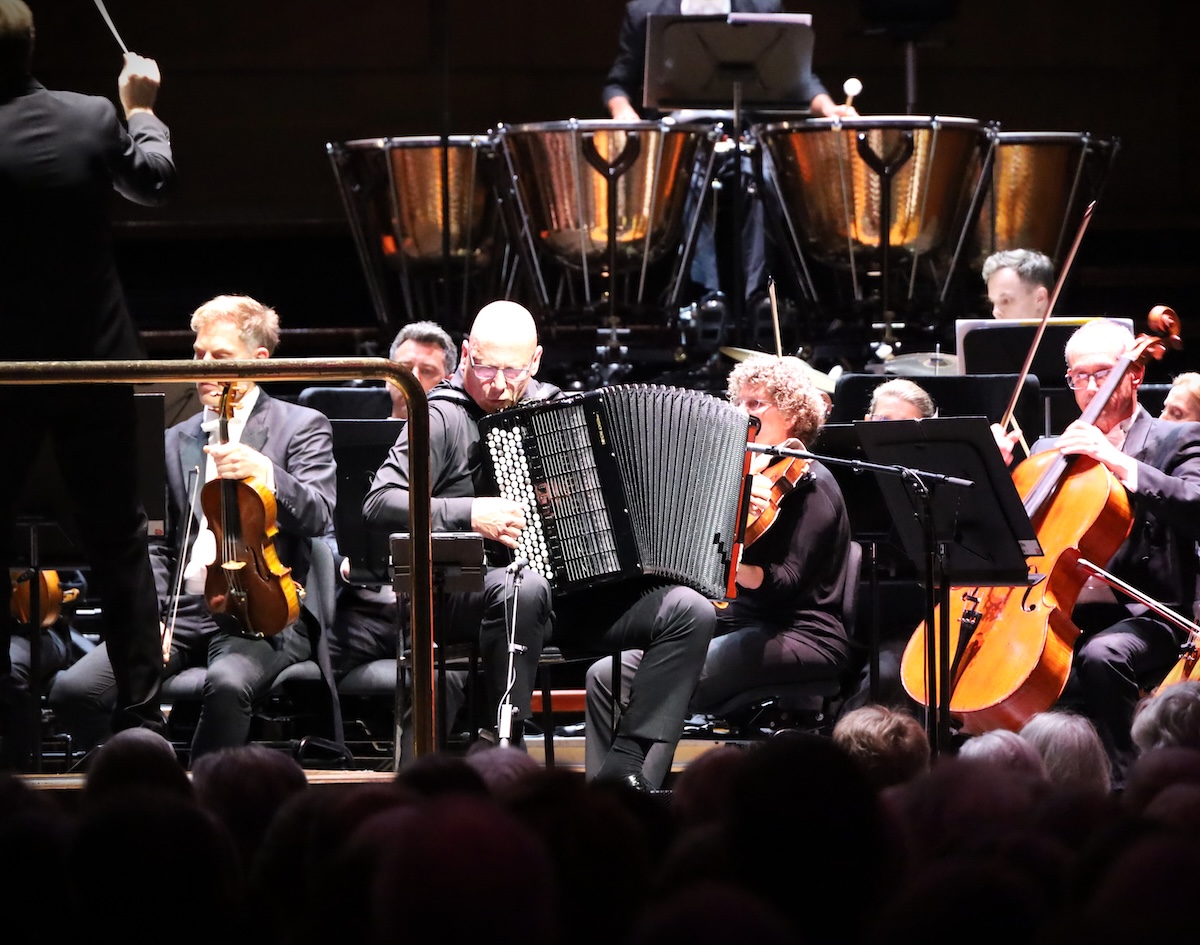
James Crabb and musicians of West Australian Symphony Orchestra. Photo supplied
Squeeze begins with accordion and four horns, the solo line slipping in and out of brass camouflage. Engine Room sets the instrument’s lowest growl against its highest whine over a glitching, motoric pulse.
Discreet amplification put soloist and orchestra on equal footing. Harrison imagined Crabb as a mad scientist with the orchestra as his Petri dish. On this evidence the experiment works, and the result is immensely entertaining.
Copland’s Appalachian Spring suite had opened the evening with clean lines and an unforced glow, the Shaker variations building steadily to a broad, dignified last statement of the hymn.
Then Saint-Saëns, as gilded and unembarrassed as Garnier’s Opéra. Stewart Smith’s hushed D flat entry in the Poco adagio seemed to rise through the floor beneath the strings. From the eighth row where I was sitting, the C major chord that launches the finale landed in the chest as much as in the ears, and the peroration was at times completely overwhelming. Saint-Saëns intended exactly that, and Northey kept the fugato textures clear enough to tell before letting the full weight of organ and orchestra loose in Winthrop Hall’s generous acoustic.
Superbly played and astutely conducted, this was a fun concert, and fun is a word critics should use more often.







Comments
Log in to start the conversation.