


Another in WASO’s Matinee Symphony Series, this morning concert presented the music of Maurice Ravel, Cécile Chaminade and Joseph Haydn in an attractive overture-concerto-symphony format.
At the helm, WASO’s Associate Conductor Jen Winley. At the piano, popular Australian pianist and TV personality Andrea Lam. On the page, Ravel’s orchestration of his solo piano suite Le Tombeau de Couperin, Chaminade’s Konzertstück for Piano and Orchestra and Haydn’s Symphony No.96 “Miracle”.
Scored for chamber orchestra, the four-movement incarnation of the originally six-movement Le Tombeau de Couperin is all lightness, transparency and colour – Baroque inspiration, elegant expression of grief for friends fallen in war. The oboe (here, the marvellous Liz Chee) has much to do; but the winds more broadly are also kept busy delineating ornamental figurations against the strings while harp echoes the plucked strings of a lute or harpsichord continuo.
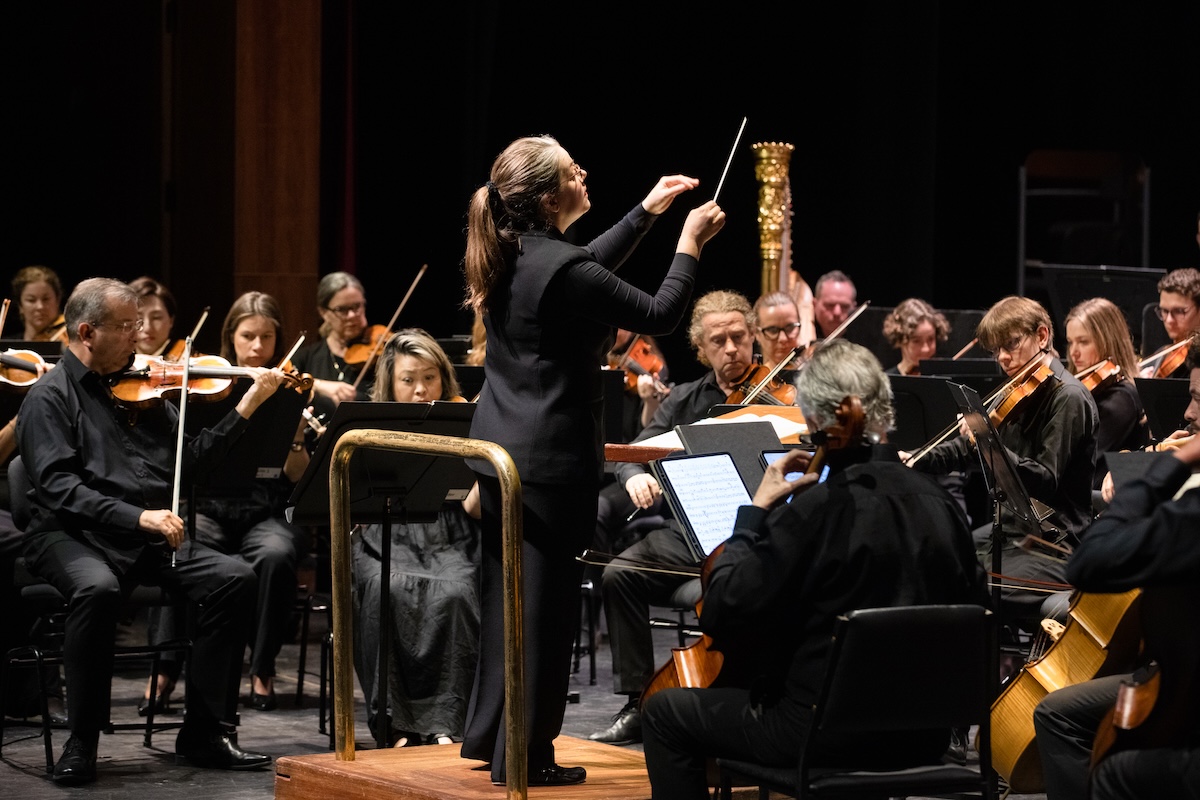
Jen Winley conducts WASO’s Haydn’s Miracle Symphony. Photo © Daniel James Grant
Looking forward to the classical proportions of the Haydn, Winley and WASO imbued the Prélude, Forlane and Menuet with a real sense of French refinement and grace before pulling out a few more stops for a lively Rigaudon. An exquisite performance of exquisite music.
Chaminade’s Konzertstück for Piano and Orchestra has always struck me as somewhat superficial and formulaic, all effect and no substance, the excesses of Liszt but without his genius. Neither Lam’s impeccable musicianship and glittering, assured performance, from memory, nor WASO’s enthusiastic accompaniment could convince me otherwise. A pity, as Chaminade was a great composer and her Automne from the Six Études de concert for solo piano and Piano Trio No. 2 in A minor, Op. 34 are masterpieces.
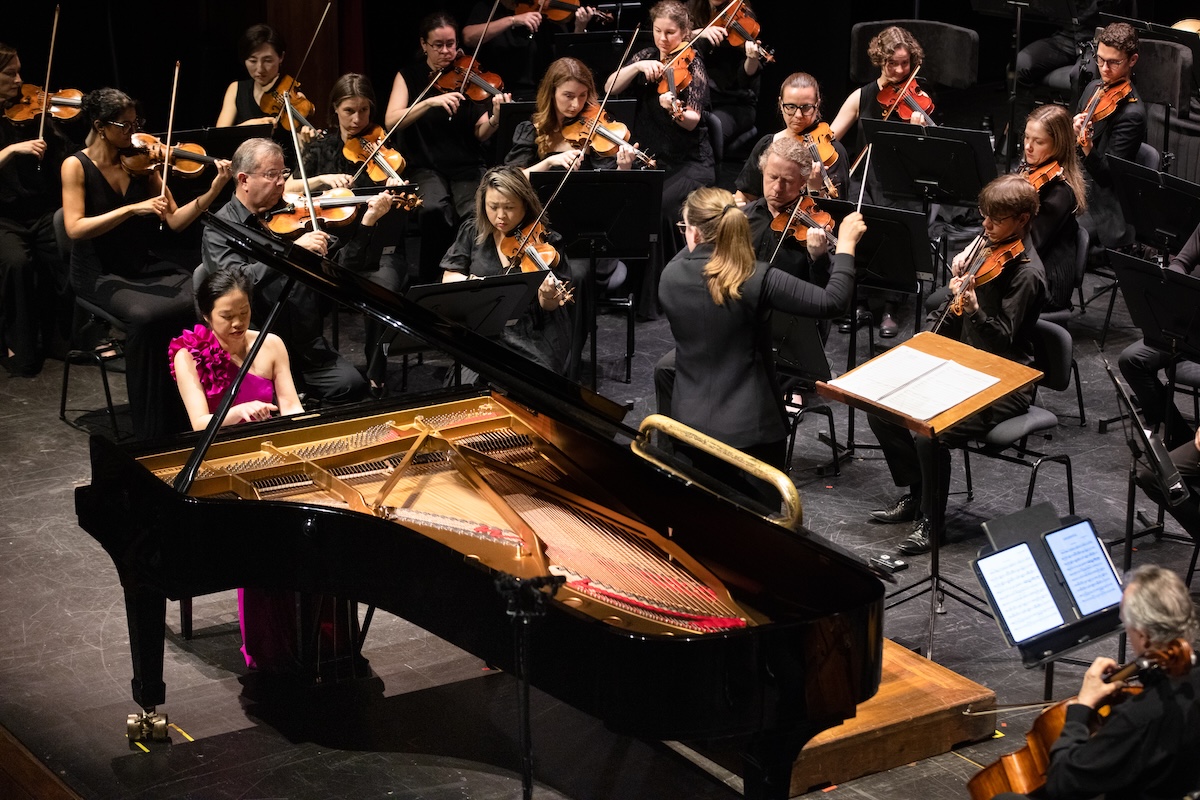
Andrea Lam and West Australian Symphony Orchestra. Photo © Daniel James Grant
Haydn’s Symphony No. 96 in D major gets its mistakenly-applied nickname from a falling chandelier incident which took place during the performance of the Symphony No. 102. Here, its chamber-music delicacy fitted well with the Ravel while contrasting with Chaminade’s blustery romanticism.
Winley and WASO strove for the miraculous and almost got there, a stately Adagio ushering in a delightfully playful Allegro in the first movement; a superbly handled G-minor fugato section and conversational cadenza-like closing section in the Andante; finely-judged formal weight and pastoral lightness, and more oboe artistry from Chee, in the Menuetto; and a sprightly rondo Finale, performed with “the softest piano and a very quick tempo” – exactly as Haydn requested.








Comments
Log in to start the conversation.