


Every work on this program began somewhere other than music, whether in a late-night visit to a building site, a political crisis on the far side of the Pacific or a painting cut in half and in half again until nothing remained but stripes. What interested me was how much of that origin could be heard.
Esa-Pekka Salonen’s Fog, given its Australian premiere in the chamber version for 13 players, recalls the night Frank Gehry, wanting to hear music in his unfinished Walt Disney Concert Hall, stood in the balcony in a hard hat while concertmaster Martin Chalifour played the Preludio from Bach’s Third Partita for solo violin.
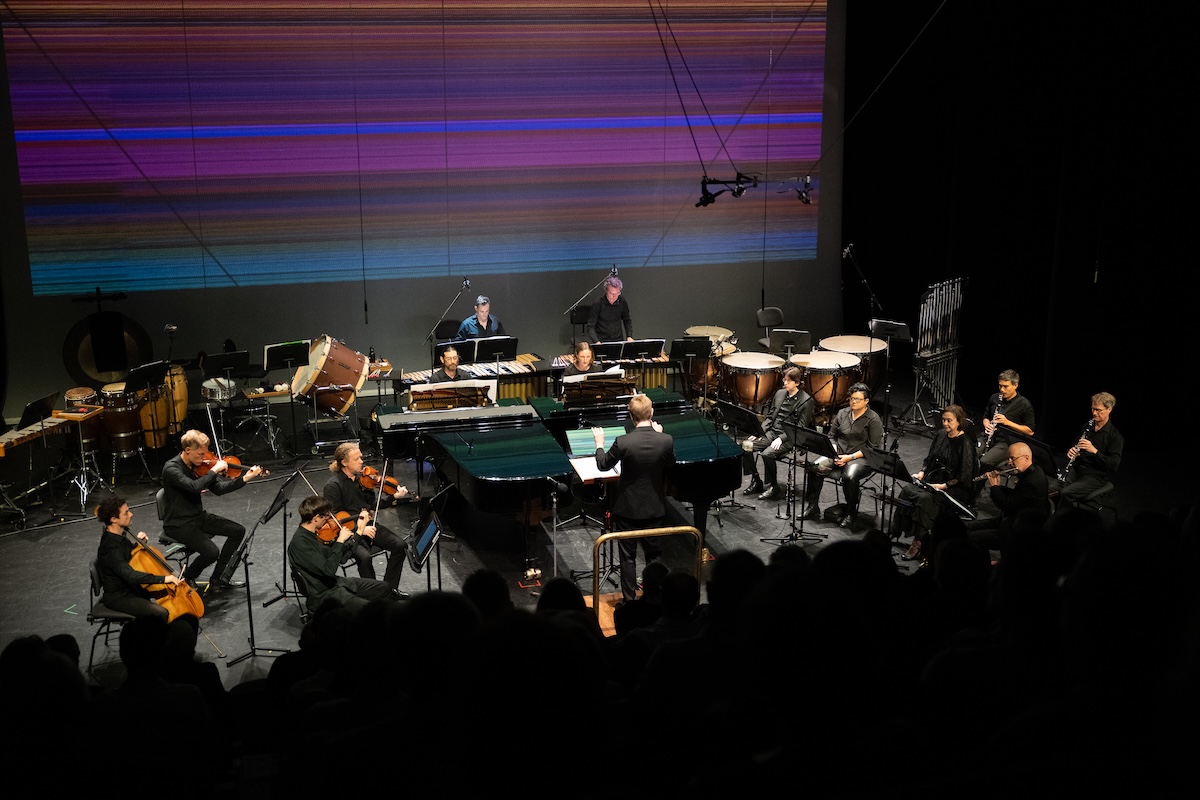
West Australian Symphony Orchestra perform Reich/Richter. Photo © BKD Media
Although conductor Benjamin Northey here dispensed with the offstage Bach that Salonen recommends as a prelude, the memory survived intact, because Salonen builds his harmony from Gehry’s name, F-A-G-E-H, whose natural Fs and Gs sit a semitone beneath Bach’s E major and cloud it, so that the Partita comes to us as if through one of Richter’s blurred photo-paintings, its outline holding while its edges smear. As well as in more literal substructures and snatches passed from one instrument to another. A marvellous performance of a marvellous work.

Benjamin Northey conducts the West Australian Symphony Orchestra. Photo © BDK Media
Talented Melbourne-based Perth-born composer Vanessa Perica gives her WASO commission After the Promise a compelling big-band swagger, shot through with lyricism, that runs through all three movements, “Fracture”, “Resilience” and “Darkening Ground”.
However, had she not explained, in a preceding onstage conversation with Northey, that the piece responds to immigration politics in the United States, we would have been none the wiser.
Thankfully, After the Promise is good enough to require no such extra-musical props. It received the terrific reading it deserved from Northey and WASO.
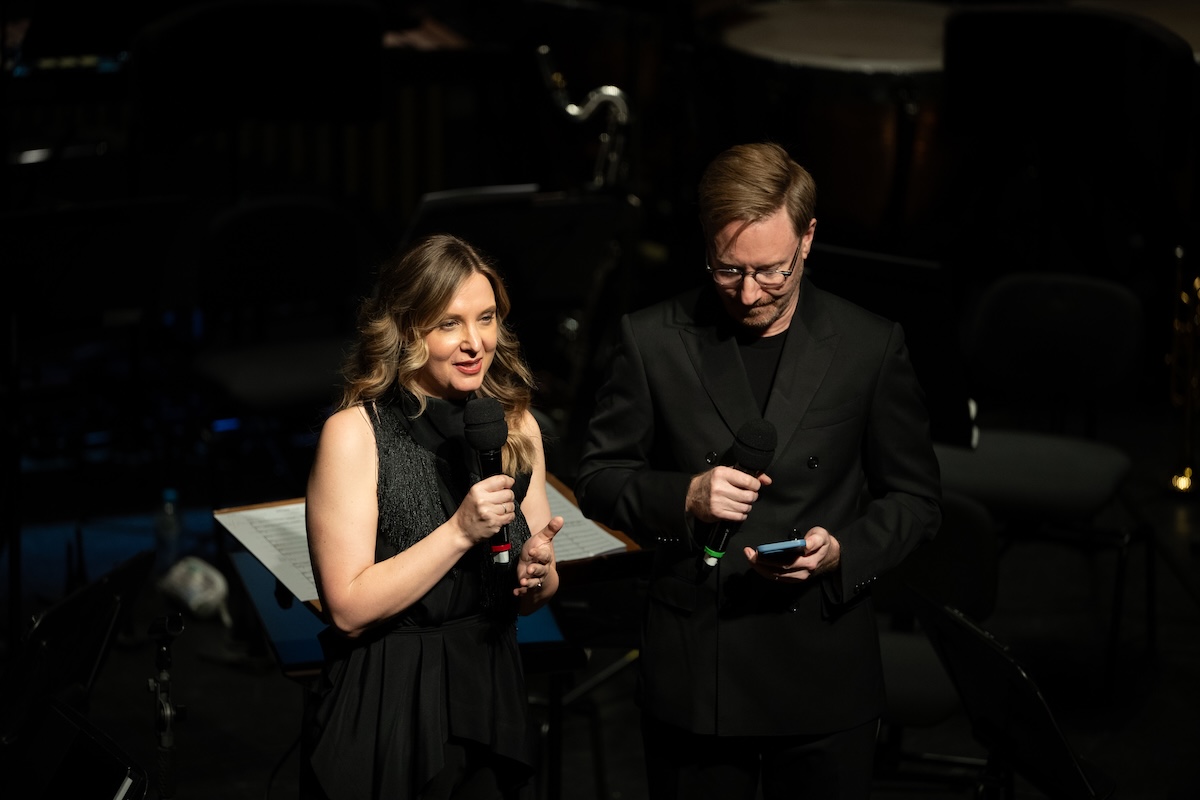
Vanessa Perica and Benjamin Northey. Photo © BKD Media
No such gap opened in Reich/Richter, where Reich ties his music to the pixel widths of Moving Picture (946-3), the film by Gerhard Richter and Corinna Belz. Two-pixel stripes become oscillating semiquavers, which broaden to dotted minims as the stripes widen into mirrored, Rorschach-like “creatures”, before the pulse tightens again into a final rush.
Although the players locked Reich’s interlocking patterns together with unflagging precision across 37 minutes, the visual experience fell short of the musical one: the shadows of hanging microphone cables marred the projection, and because the stage stayed lit, the musicians beneath the screen kept drawing the eye away from it. Had the room been darkened and the players given lamps or tablets, the trance would have been complete.
The Studio Underground, intimate and unadorned, proved the right room for all of it. On this evidence, the Underground Series is where WASO does its most adventurous thinking.






Comments
Log in to start the conversation.