Lovers of Robert Schumann’s lieder – and I count myself among those happy multitudes – will find song in everything he wrote. Judging by this intimate, lyrical performance, Belarusian-French cellist Ivan Karizna, conductor Otto Tausk and the West Australian Symphony Orchestra certainly seem to have done so in the composer’s Cello Concerto in A minor, Op. 129.

The song-seed had however already been planted when, following attacca the Overture from Haydn’s Die Schöpfung (The Creation), Sibelius’ The Swan of Tuonela found Jonathan Ryan’s cor anglais soaring magnificently over WASO’s transparent strings. A standout performance which earned Ryan much enthusiastic applause.

Equally miraculous however was the way Tausk and WASO, with superb dynamic, textural and rhythmic finesse, made the Sibelius seem to emerge quite naturally out of the Haydn. Creation, indeed.
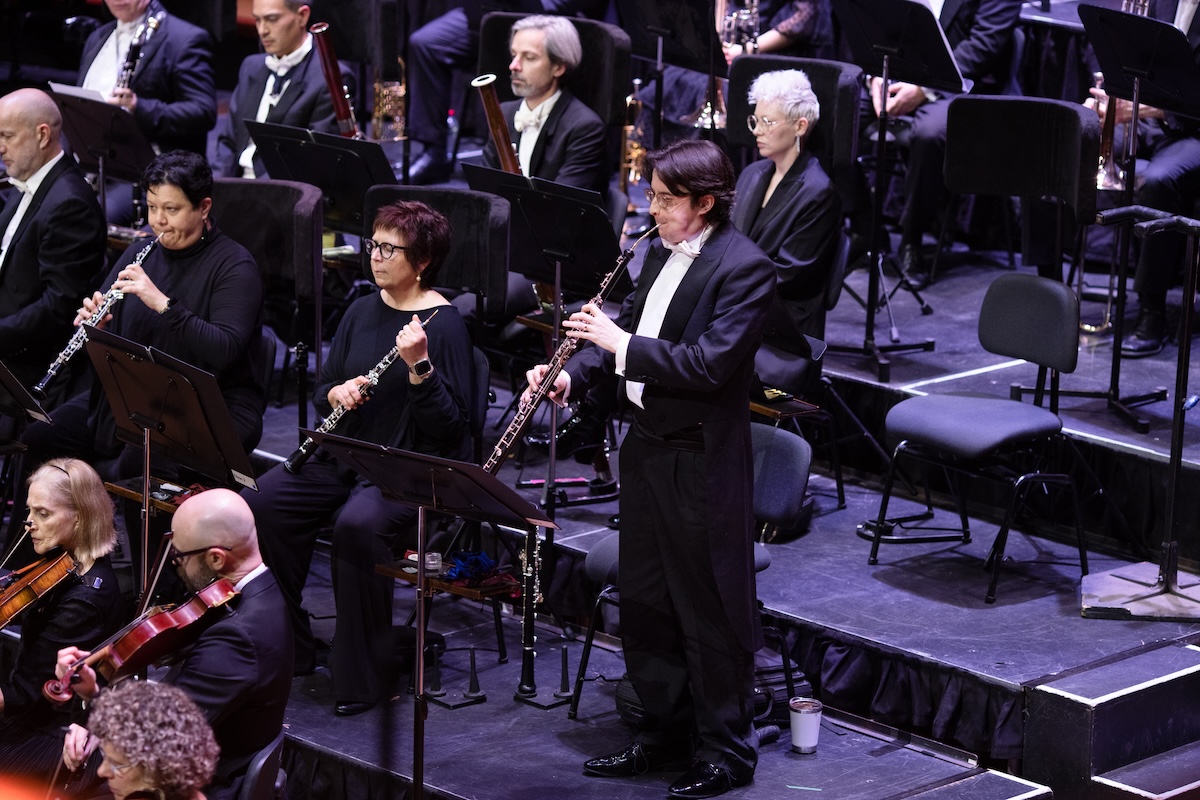
Jonathan Ryan and the West Australian Symphony Orchestra. Photo © Daniel James Grant

Equipped with a 1760 Tassini cello formerly owned by Paul Tortelier, Karizna – making his WASO debut – then joined WASO for the Schumann. That conductor and orchestra had already demonstrated such clarity, such precise yet flexible rhythmic control, such transparency of sound in the preceding works was undeniable.

What Karizna brought to the mix was the sense of songster and storyteller combined, the ensuing conversation more reminiscent of Schumann’s Dichterliebe, as between baritone and an exquisite piano accompaniment, than of a heroic concerto.

Ivan Karizna, conductor Otto Tausk and the West Australian Symphony Orchestra. Photo © Daniel James Grant

Karizna approached the first of the three connected movements – yes, another reason the fusing of the Haydn and the Sibelius was a genius move – with a warm, romantic yet unsentimental tone and phrasing which created space for the music to measure its breath against the harmony. The orchestral playing was just as considered, the woodwinds especially well-balanced.

And while the sublime duetting of Karizna and principal cello Rod McGrath in the evanescent Langsam punched far above its weight in rhetorical equipoise and lusciousness, Karizna’s cadenza in the final Sehr lebhaft felt almost transgressive in its beautifully judged solipsistic confidence – a heftier dose of which Karizna gave us in a startlingly visceral, virtuosic encore, Giovanni Sollima’s Lamentatio from 1998. Here, Karizna actually did often chant and wail alongside his cello, both voices sailing bravely into the turbulent seas of improvisatory lugubriousness and Sicilian rusticity.

Which left landfall in the more familiar form of Brahms’ Third Symphony. The opening three chords landed with appropriate decisiveness; Tausk unveiled the ensuing argument with a sure sense of feeling the parts against the whole while moving by discrete chapters rather than paragraphs.

Ivan Karizna and the West Australian Symphony Orchestra. Photo © Daniel James Grant

WASO responded in kind – the strings cohesive and purposeful, David Evans’ horn solo in the lyrical third movement beautifully evoking both Karizna’s and Ryan’s prior contributions. The Poco allegretto was succinctly proposed, measured, autumnal, the cellos finding their opening theme with quiet authority before Tausk allowed it to unfurl unforced.

This was a cultivated Brahms which derived its interpretative power from an almost sacred geometry.


For more information on the West Australian Symphony Orchestra in 2026, visit waso.com.au

Contribute to Limelight and support independent arts journalism.