


Vivaldi’s Le quattro stagioni (The Four Seasons, 1723) is a landmark work of Western art music and the Baroque which, in its attempt to express nature, presaged developments in nineteenth-century Romantic music, and whose repeated figures created a precedent for twentieth-century Minimalism by the likes of Philip Glass and Louis Andriessen.
Aaron Wyatt’s commission for Australian Baroque reworks Vivaldi’s conceit of a suite of pieces alluding to the seasons, transposing them to Noongar boodjar. Wyatt principally draws on his own experience of growing up as a Noongar man on Wadjuk Country in Perth.
Vivaldi’s influence is mostly present in the structure of the ensemble, which consists entirely of bowed string instruments (eleven violins, four violas, two cellos, one bass), with one plucked-string instrument (the harpsichord), and thus is wholly defined by the lyrical, often soaring sound world of attacks and tremolos.
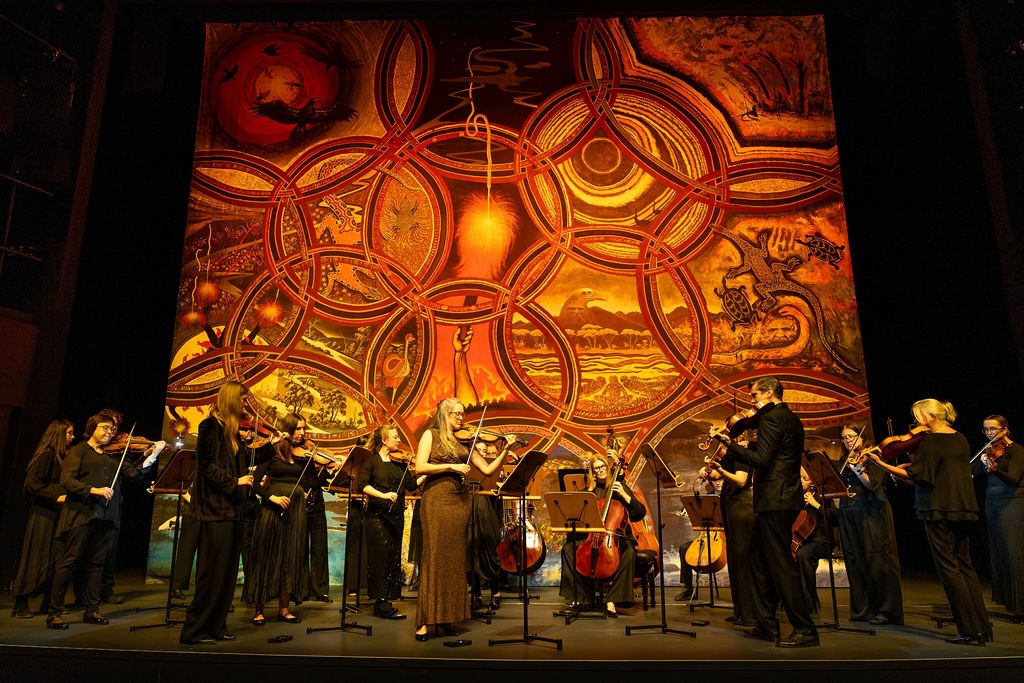
Australian Baroque: The Six Noongar Seasons. Photo supplied
The majority female ensemble, led by artistic director and soloist Helen Kruger, helped to create an onstage mood which seemed somehow very contemporary, and quite apart from that of many other Australian orchestras.
Vivaldi’s approach was paralleled and updated through the commissioning of six...
Continue reading
Get unlimited digital access from $4 per month
Already a subscriber?
Log in






Comments
Log in to start the conversation.